Land consumption: a national law is urgently needed to reconcile renewables, land use, and sustainability.
Land use and the development of renewables require a national law capable of reconciling land protection and decarbonization objectives.

The issue of land use is once again at the center of public debate. The growth of sealed surfaces, the pressure on ecosystems, and the challenge of energy transition highlight an unresolved issue: without a clear and coherent national law, it becomes difficult to protect the land and, at the same time, accelerate the development of renewable energy.
For planners, companies, and energy operators, it is a balance that must be urgently defined.
Italy is consuming more and more land: a worrying trend
The latest data show a steady acceleration in the loss of natural and agricultural soil , with consumption growing year after year.
Every hectare taken away from ecosystems means less permeability, less water absorption capacity, loss of fertility and increased hydrogeological risk .
In the absence of comprehensive legislation, the framework remains fragmented: regions with different criteria, municipalities applying inconsistent rules, and planning that struggles to reconcile environmental, energy, and urban planning needs.
Energy transition and land protection: two needs that must interact
The need to expand installed capacity from renewable sources is unquestionable. Photovoltaic , wind, and integrated systems with storage are essential to achieving climate goals and reducing dependence on fossil fuels.
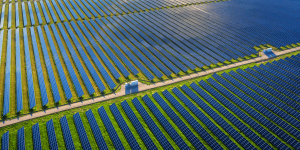
However, when the systems directly affect the soil, particularly in the case of ground-mounted photovoltaics, tensions arise with the agricultural world and with landscape protection.
Without clear guidelines, the risk is a permanent conflict between two objectives that should proceed together: decarbonisation and land protection .
Why clear rules are needed: the land consumption law as a tool for balance
A national law could become the benchmark for effectively managing this balance. A truly structured regulation should:
- set targets and limits on net land take , in line with the European “no net land take” target by 2050;
- encourage the reuse and regeneration of already urbanized areas , reducing pressure on agricultural and natural land;
- provide a stable framework for the authorization of RES plants , overcoming uncertainties and territorial differences;
- promote the integration of renewables in production areas , buildings and already compromised surfaces, encouraging energy development consistent with landscape protection.
Only a coordinated approach can allow the energy transition to advance without sacrificing precious environmental resources.
Related Focus