Bioenergy Day 2025: Bioenergy would guarantee 35 days of national energy consumption.
Bioenergy Day 2025 confirms the role of bioenergy in national heating: 35 days of covered consumption and increasingly structured local supply chains.
On 27 November 2025 Italy celebrates Bioenergy Day , the date that indicates the time of year in which the national energy needs could be covered entirely by bioenergy .
It is a symbolic indicator, but a useful one for understanding the concrete contribution of biomass to the national energy mix, especially in the residential heating sector, where this renewable source still represents a structural component.
Bioenergy accounts for more of a domestic heating cost than any other renewable energy source.
The domestic heating sector continues to be the main area where bioenergy expresses its value. Nearly 9 million wood biomass-fired generators are installed in Italy, and over 96% of these are domestic appliances such as stoves, inserts, and boilers dedicated to residential buildings.
Woody biomass remains one of the most widespread renewable sources for residential heating thanks to its territorial availability, the programmability of thermal production, and significant technological advances in new-generation appliances.
For HVAC/R operators, this means working in a context where bioenergy—even alongside heat pumps, solar thermal, district heating networks, and hybrid systems—continues to play a key role in meeting buildings' heating needs.
More efficient technologies and more mature supply chains
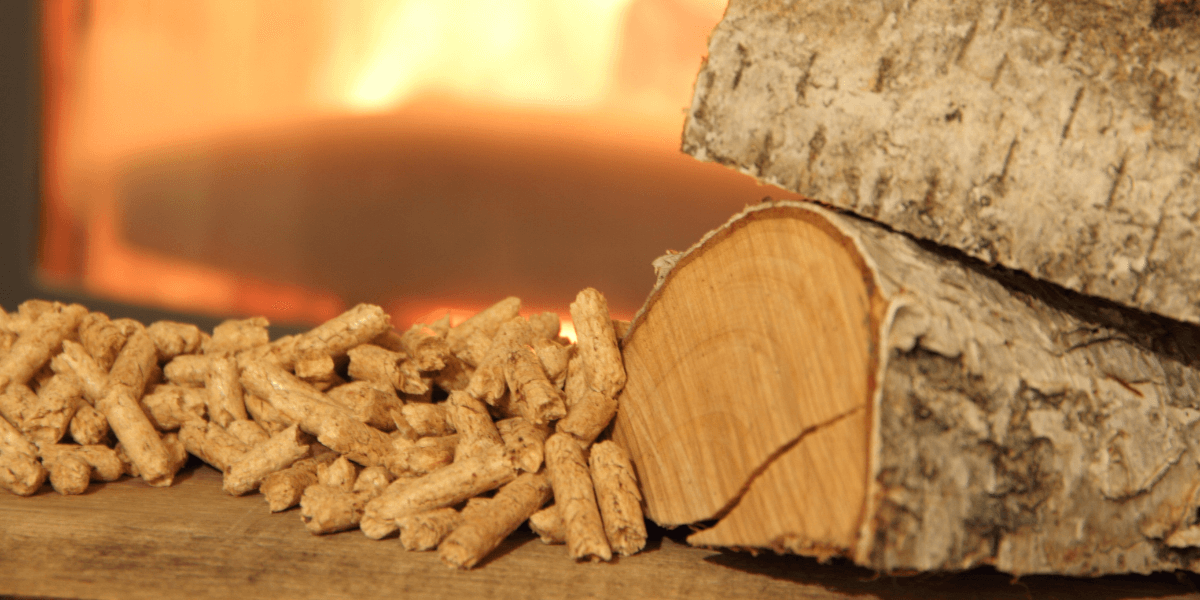
The wood-energy supply chain has made a qualitative leap thanks to more efficient generators , advanced control systems and certified fuels , such as pellets, wood chips and firewood.
The ENplus®, Biomassplus® and ariaPulita® certifications help qualify the entire supply chain, reduce emissions and guarantee high standards for both fuel quality and appliance performance.
In the context of the energy transition , bioenergy allows us to enhance local resources, reduce dependence on fossil fuels and develop distributed generation models that can be easily integrated into building heating systems.
A concrete example: the biomass district heating of Vernante
Among the projects that demonstrate the potential of local supply chains, the case of the Municipality of Vernante (CN) is particularly significant.
A district heating system powered by locally produced wood chips has been developed on approximately 700 hectares of previously undermanaged municipal forests.
The thermal power plant, equipped with lambda probe generators and advanced electronic management, currently provides heat to public buildings and residential users. It's a key and replicable example of how sustainable forest management can become a reliable energy infrastructure in areas where biomass is available through short supply chains.
Related Focus