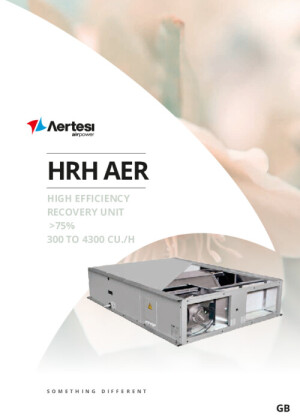
HRH AER by Aertesi: when air exchange becomes energy efficiency
HRH AER combines heat recovery, efficient ventilation and advanced control to improve air exchange in non-residential buildings
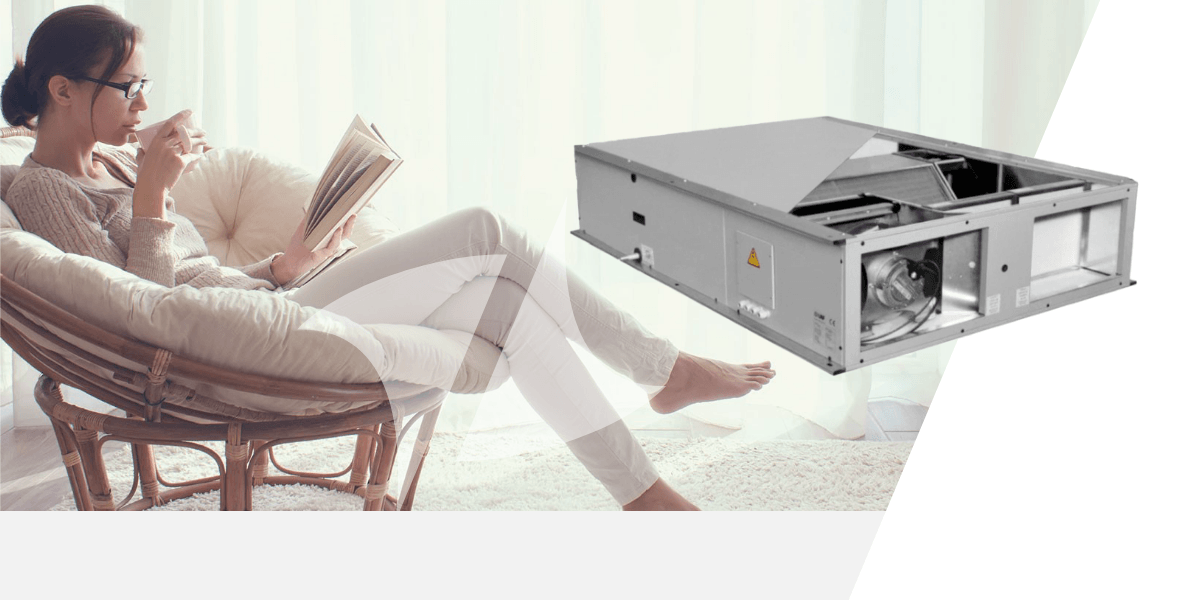
Ensuring adequate air exchange within offices, schools, public facilities, and other non-residential buildings is essential to creating healthy and comfortable environments. At the same time, the constant introduction of outside air can significantly increase the energy required for heating and cooling spaces.
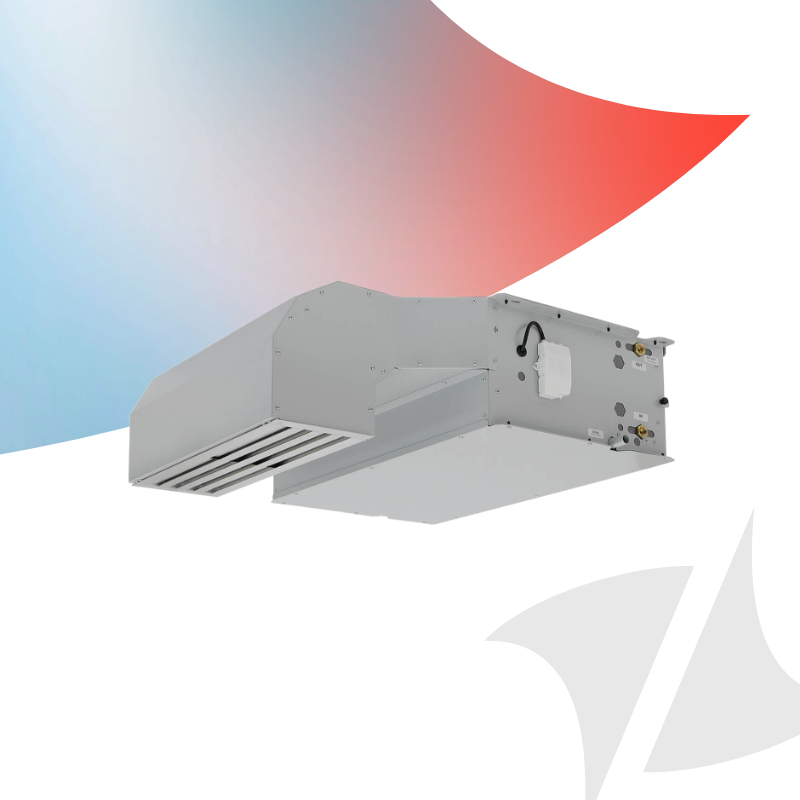
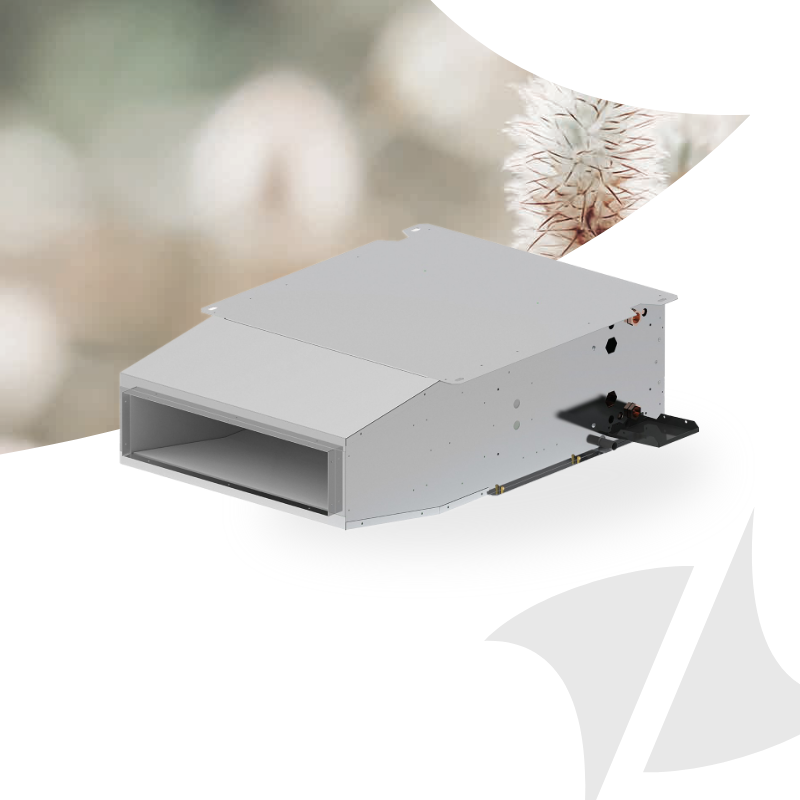
To meet these needs, Aertesi offers HRH AER , a range of ventilation units with air-to-air recovery designed to combine indoor air quality, continuous air exchange, and energy savings. By recovering the energy contained in the extracted air, the system limits ventilation-related losses, reducing the load placed on air conditioning systems.
Recover heat to reduce building energy needs
The heart of the HRH AER is an aluminum countercurrent air-to-air heat exchanger . Before being expelled outside, the stale air releases part of its thermal energy to the fresh air, without the two flows coming into direct contact.
During the winter, this process allows cold air coming from outside to be preheated; in the summer, however, it helps reduce the temperature of the hot air introduced into air-conditioned environments. Declared recovery efficiencies range between 83% and 86.5% in humid conditions, depending on the selected size. The range covers applications with high flow rates, reaching up to 4,500 m³/h in the largest size .
Energy recovery thus becomes an integral part of the building's systems strategy: air renewal is not considered a simple exchange, but a controlled process in which comfort, healthiness, and efficiency work together.
Efficient ventilation and automatic free-cooling
The exchanger's performance is complemented by the use of free-wheel fans with backward-curved blades , directly coupled to high-efficiency EC motors. Regulation allows ventilation to be adapted to the actual needs of the system, reducing electrical consumption compared to traditional, less modulating solutions.
A further contribution to reducing consumption comes from the integrated motorized bypass . When external weather conditions are favorable, the system can automatically bypass the heat recovery unit and use outside air directly to cool the rooms. This free-cooling mode is particularly useful during the mid-seasons or during the cooler hours of the day, when the outside temperature can naturally contribute to achieving comfort conditions.
The HRH AER configuration brings together several elements designed to improve the overall behavior of the unit:
- filtration of fresh and return air , with F7 and M5 filters indicated in the technical equipment;
- EC fans adjustable via 0–10 V signal ;
- automatic bypass for free-cooling operation;
- high efficiency countercurrent recuperator;
- low pressure drops and low specific consumption;
- Different flow rates and configurations to adapt to the characteristics of the system.
Double paneling for insulation and construction solidity
The efficiency of a heat recovery unit also depends on the casing's ability to limit dispersion, vibrations, and noise transmission. For this reason, the HRH AER features a double-shell panel structure, made of pre-painted steel on the outside and galvanized steel on the inside.
A 25 mm thick mineral wool insulation layer, rated A2-s1,d0, is inserted between the two panels. This solution improves the unit's thermal and acoustic insulation and structural rigidity, aspects that are particularly important in applications where the heat recovery unit is installed near occupied spaces or inside the building.
The range is available in horizontal or vertical configurations , with four different airflow configurations. The designer can therefore identify the most suitable arrangement based on the available technical space, the ductwork layout, and the overall system organization.
Electronic control and integration into building management
The HRH AER features an integrated control panel with electronic control and a remote user interface. The system not only controls the fans, but also coordinates the main functions required for proper operation of the unit.
The control allows you to manage ventilation and temperature, monitor filter status, set a weekly schedule, and coordinate defrosting and frost protection functions. It also includes fire alarm management and a Modbus interface , useful for connecting the recovery unit to BMS systems and centralized building supervision.
Maintenance operations were also considered in the unit's configuration. The ventilation and filter sections are accessible through hinged and lockable panels, while additional filter access is available through removable panels. This layout is designed to simplify periodic checks and the replacement of maintenance-required components.
With HRH AER, Aertesi offers a solution for ventilation systems in the non-residential sector, combining energy recovery, air quality, and electronic control into a single system. This comprehensive configuration is designed to ensure continuous air renewal while limiting the impact of ventilation on the building's overall energy consumption.
Aertesi Srl

Available documents