



Renewable Energy Communities: Europe's Push to Accelerate Self-Consumption and Shared Energy
The new European recommendation aims to accelerate energy communities, self-consumption, and renewable energy sharing.
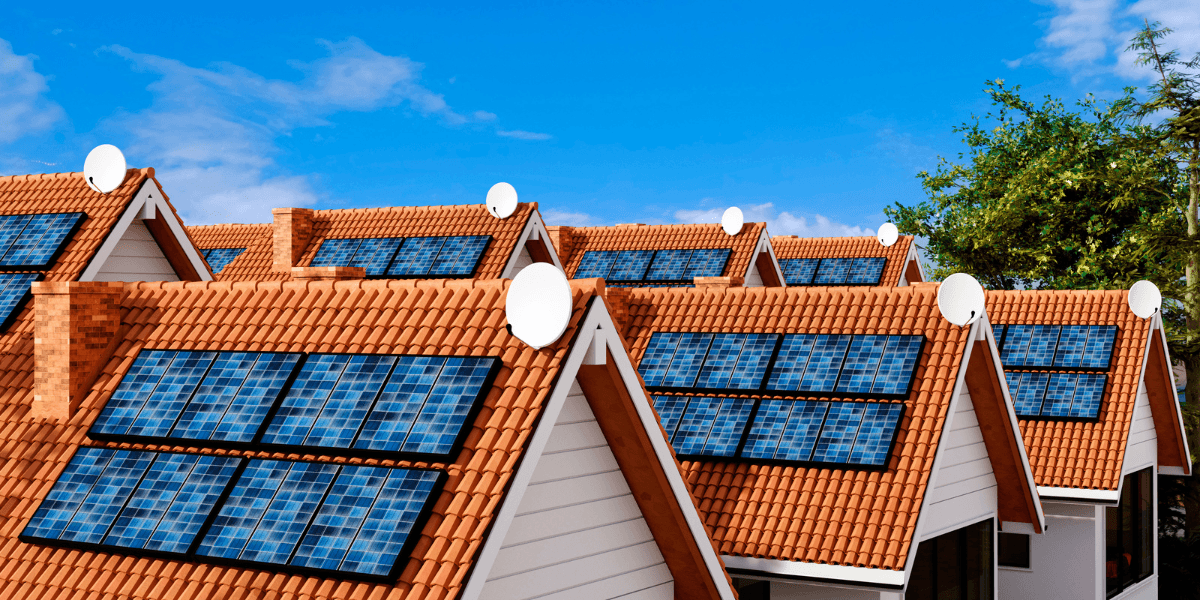
Renewable energy communities are entering an increasingly mature phase of Europe's energy transition. They no longer represent just an experimental model of shared production, but a tool capable of engaging citizens, SMEs, public bodies, and local authorities in the generation, management, and exploitation of clean energy.
The new EU Recommendation 2026/1007 , adopted by the European Commission on 30 April 2026 and published in the Official Journal on 8 May , provides Member States with a series of actions to accelerate the development of energy communities, self-consumption, and energy sharing . The aim is to make these models more accessible, scalable, and integrated with the electricity system, reducing administrative barriers and improving access to the grid, data, and financing.
From distributed renewables to local energy platforms
The European recommendation calls on Member States to develop clearer and more coherent regulatory frameworks for renewable energy communities, citizen energy communities, active customers, and self-consumers. An important step is precisely the need to properly distinguish the different configurations, clarifying governance, purposes, rights, and responsibilities.
For energy and plant professionals, this approach confirms the shift in scale of CERs : not simple virtual aggregations, but local energy systems capable of integrating renewable generation, storage, load management, and flexibility services.
From this perspective, energy communities can become territorial platforms capable of fostering dialogue :
- photovoltaic systems and other distributed renewable sources;
- storage systems to optimize self-consumption and energy management;
- heat pumps and renewable systems for heating and cooling;
- charging infrastructure for electric mobility;
- smart meters, energy management software and digital platforms;
- aggregators and flexibility markets.
Energy sharing, therefore, is not just about local production, but also the ability to coordinate consumption, data, and technologies to increase the value of renewable energy produced locally.
Simplification, network and data: the key to making CERs operational
One of the most important aspects of the document concerns the need to reduce the administrative obstacles that still slow down the launch of energy communities and self-consumption projects. The Commission emphasizes the importance of digital procedures, one-stop shops, dedicated helpdesks, voluntary contractual models, and easily accessible technical, legal, and financial information .
Simplification concerns not only the authorization phase, but the entire project lifecycle: incorporation of the legal entity, grid connection, data management, energy allocation, participant remuneration, financing, and potential market participation.
The document also calls for simplifying connections and removing administrative obstacles for small photovoltaic systems, storage systems, plug-in batteries, and balcony photovoltaic solutions up to 800 W. At the same time, grid operators are called upon to consider the expected growth of self-consumption and energy communities in their development plans, so as to plan investments consistent with the evolution of distributed generation.
Another key issue is data. To make energy sharing truly effective, interoperable, secure, and standardized systems are needed. Metering data should be available in near real time to improve shared energy calculations, billing, self-consumption optimization, and flexibility services.
Financing, inclusion and energy requalification of buildings
The European recommendation also focuses on access to finance and social inclusion . Energy communities can help make the transition more accessible, especially when they involve vulnerable families, tenants, condominiums, residents of social housing, and small consumers.
In the Action Plan accompanying the Recommendation, Brussels identifies five areas of intervention : effective support frameworks, access to financing, awareness-raising and capacity building, social inclusion, digital innovation, and system integration. As part of the Citizens' Energy Package, the Commission also sets the goal of installing up to 90 GW of renewable capacity in energy communities.
For Italy , the issue is part of a framework already in place through the CACER Decree, the GSE regulations, and the PNRR measure dedicated to renewable energy communities. Distributed self-consumption configurations can access a feed-in tariff on shared energy and, for specific configurations, a capital contribution of up to 40% of eligible costs.
For the HVAC and energy sectors, renewable energy sources can also play a significant role in building and neighborhood redevelopment processes. Their potential grows when renewable energy production is integrated with building envelope interventions, electrification of consumption, heat pumps, storage systems, and charging infrastructure. The challenge now is to move from the regulatory framework to design capacity: building truly functional energy communities, with measurable benefits and capable of generating energy, economic, and social value for the local communities.
Related Focus
FAQ
Renewable Energy Communities (CERs) are particularly strategic in residential, tertiary, light industrial, and small towns, where local production and consumption can be efficiently integrated. In the HVAC/R sector, CERs promote the use of heat pumps, storage, and electrified air conditioning systems powered by shared energy. This model increases self-consumption, energy resilience, and reduces energy costs for buildings and businesses.
Collective self-consumption reduces grid dependence and improves energy cost stability, especially in contexts characterized by highly volatile energy prices. Furthermore, local energy sharing increases the overall efficiency of the electricity system and can improve the economic sustainability of investments in photovoltaic and storage. For the HVAC/R sector, this translates into greater cost-effectiveness in electrifying heating and cooling.
In the medium term, strong growth in CERs is expected thanks to European regulatory support, the spread of smart grids, and the digitalization of energy systems. Energy communities will evolve towards increasingly integrated models with storage, electric mobility, and predictive consumption management. For the HVAC/R sector, this means designing increasingly interconnected, modular systems that are capable of operating in shared and decentralized energy ecosystems.
