



Italy's Energy Transition: Renewables: Growth, Delays, and New Priorities
Renewables are growing in Italy, but the energy transition requires infrastructure, storage, and regulatory simplification.
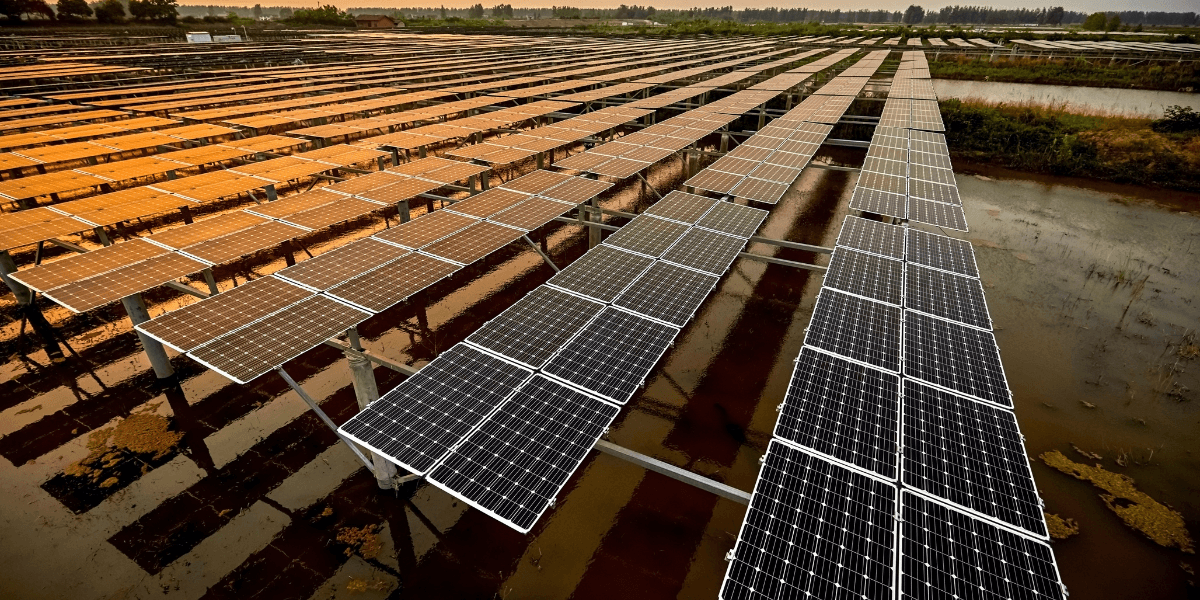
The energy transition in Italy continues, but at a pace that presents both positive and negative aspects. Renewable sources are gradually strengthening their role in the energy mix, contributing to emissions reductions and energy source diversification. At the same time, however, some critical issues are emerging that are slowing the progress towards the targets set at the European and national levels.
The issue is not just about growing installed capacity, but the system's ability to integrate production, infrastructure , and energy management in an effective and coordinated manner.
Renewable Energy Growth and 2030 Targets
In recent years, the development of renewables has accelerated significantly, driven primarily by photovoltaic and wind power . However, the growth rate remains insufficient compared to the targets of the Italian National Energy Strategy (PNIEC), which calls for a significant increase in installed capacity by 2030.
At the same time, the topic of energy storage is emerging forcefully, as it is increasingly considered central to managing renewable energy production. According to analyses, storage capacity will need to grow significantly in the coming years, reaching 44-71 GWh by 2030 , to ensure more efficient management of the energy produced.
This highlights how the transition cannot be based solely on increasing the number of plants, but requires an overall evolution of the energy system.
Infrastructure, authorizations, and the electrical system: the issues to be resolved
One of the main obstacles to the development of renewables concerns the system's ability to support their growth. Specifically, the critical issues focus on a few key aspects:
- complex authorization procedures and long implementation times
- need to strengthen and modernize electricity networks
- connection difficulties for new systems
- lack of adequate infrastructure to manage distributed production
Electricity grids currently represent one of the main bottlenecks in the transition: without adequate investment, installed renewable capacity risks not being fully utilized or integrated into the system.
Implications for the HVAC industry and buildings
The evolution of the energy system also has direct implications for the world of buildings and systems . The growing diffusion of renewables, combined with the development of storage systems and digitalization, is changing the way energy is produced, distributed, and used.
For the HVAC industry, this translates into the need to design increasingly integrated solutions, where energy efficiency , electrification of consumption , and intelligent energy management become central elements. Systems are no longer isolated systems, but part of a broader, interconnected energy ecosystem.
Towards a more integrated energy system
The energy transition in Italy is therefore in a phase of evolution, in which the growth of renewables must be accompanied by a strengthening of infrastructure and a simplification of processes .
The future of the energy system will be increasingly based on the integration of technologies, flexibility, and energy flow management, with a growing role for storage, digitalization, and new skills.
For operators and designers, a phase is dawning in which the ability to adapt to this new scenario will be crucial to seizing the opportunities of the transition.
Related Focus
FAQ
Renewable sources are directly impacting the design of integrated building-to-building HVAC systems, especially with a particular growth in hybrid systems (heat pumps + photovoltaic) and all-electric solutions. In the residential and commercial sectors, design is shifting toward zero-energy buildings (NZEB), while in industry, the adoption of self-generated energy is increasing to reduce grid dependence. This requires a design approach that considers storage, load management, and integration with advanced control systems.
The main critical issues include complex authorization processes, infrastructure limitations of the electricity grid, and a misalignment between renewable generation growth and distribution capacity. From a plant engineering perspective, difficulties arise in managing production variability and properly integrating with existing systems. Furthermore, the lack of up-to-date technical expertise on new technologies and regulations can slow the effective adoption of solutions.
In the coming years, a strong push is expected towards storage systems, energy communities, and the digitalization of energy management (smart grids and building automation). At the regulatory level, the evolution of European directives and decarbonization targets will lead to more stringent requirements for the energy efficiency of buildings and the use of renewables. For designers and installers, integrating technologies such as high-efficiency heat pumps, intelligent control systems, and energy flexibility solutions will be crucial.
