



Global Renewables: Installed capacity to reach nearly 50% of global electricity system by 2025
By 2025, renewables are expected to reach 49.5% of global capacity, marking a key step in the energy transition.
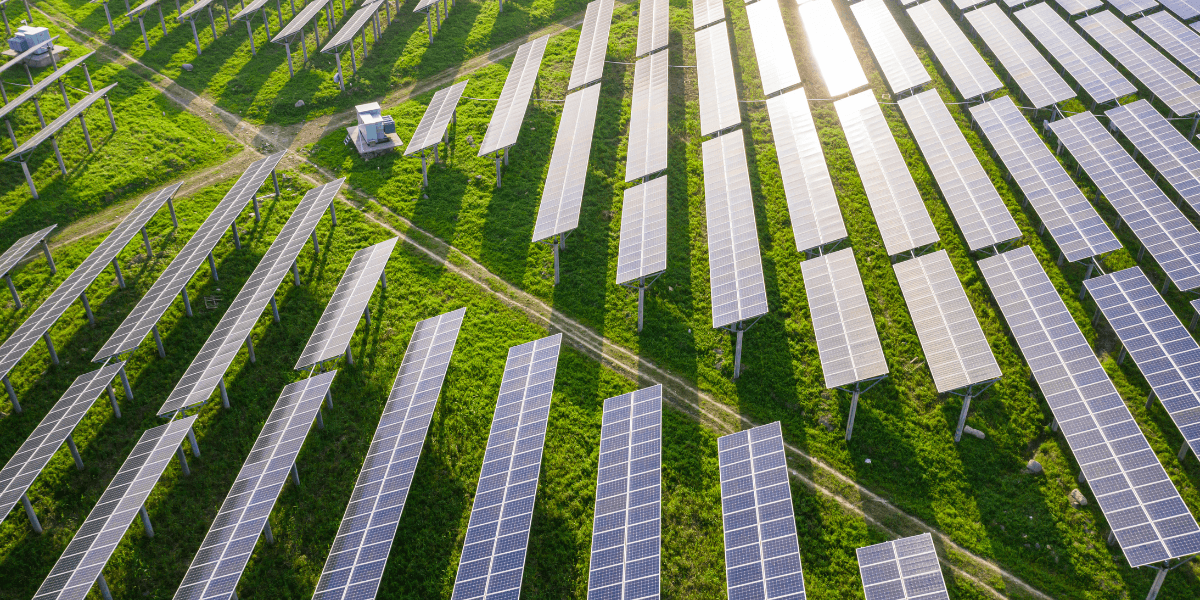
The global energy system is undergoing a structural transformation, in which renewable sources are progressively redefining the balance of electricity production.
The data for 2025 mark a significant transition: installed capacity from clean sources is now approaching half of the global total , confirming an acceleration that has assumed increasingly significant proportions in recent years.
This result reflects not only the growth in installations, but also a deeper change in the way energy is produced, distributed, and integrated into economic and industrial systems.
Structural growth and the centrality of photovoltaics
By the end of 2025, global renewable energy capacity reached 5,149 GW , representing approximately 49.5% of the world's installed electrical capacity . This figure highlights how renewables are now a structural component of the energy system, and no longer a simple alternative to traditional sources.
This growth is primarily driven by photovoltaics , which continues to expand thanks to lower costs, rapid installation, and increasing deployment at both utility-scale and distributed scales. Wind power maintains an important role, contributing to the diversification of the energy mix and balancing production.
This development confirms a now consolidated trend: the global energy system is moving towards greater electrification , supported by increasingly competitive renewable sources.
An evolving system between growth and new complexities
Achieving such a high share of renewable capacity brings with it new challenges related to electricity system management. Increasing generation from non-programmable sources requires a parallel evolution of infrastructure and energy management systems.
In this scenario, some key elements become increasingly central:
- development of storage systems , essential for managing production variability
- strengthening and digitalization of electricity networks
- integration between different renewable sources to ensure continuity
- intelligent management of demand and consumption
The issue is no longer just producing renewable energy, but making it fully integrable and usable within an increasingly complex and interconnected system.
Impacts on the world of plants and buildings
This transformation also has direct implications for the HVAC sector and building design. The growing availability of electricity from renewable sources is accelerating the electrification of consumption and pushing for more advanced energy management models.
For designers and operators, this means dealing with a context in which systems must be able to adapt to a more variable and distributed energy supply, integrating storage, automation, and intelligent control systems. Buildings thus become active nodes of the energy system, capable of interacting with the grid and optimizing their consumption based on energy availability.
Towards a new global energy balance
The 2025 figure therefore represents a symbolic but also operational step: renewables are entering a phase of full maturity , in which their role is no longer marginal but central.
At the same time, the energy transition remains an evolving process, requiring further acceleration to achieve the 2030 climate goals. The challenge is not just to increase installed capacity, but to build a truly integrated, flexible, and sustainable energy system.
For the entire supply chain, from energy to plant engineering, a phase is opening in which innovation, integration, and intelligent energy management will be crucial elements in driving change.
Related Focus
FAQ
Installed capacity from renewable sources is approaching 50% of the global electricity mix, indicating a structural transition. This scenario directly impacts system design: the need for flexible systems, integration with storage, and advanced load management is growing. For HVAC designers and system engineers, considering the electrification of consumption (heat pumps, hybrid systems) in an increasingly variable and decentralized energy landscape is becoming crucial.
The increase in renewables introduces issues related to intermittency, grid stability, and peak management. From a system engineering perspective, this requires advanced regulation solutions, thermal and electrical storage systems, and demand response logic. Furthermore, design must take into account power quality (frequency, voltage) and integration with distributed generation systems, avoiding oversizing or operational inefficiencies.
The growing share of renewables is accelerating the deployment of high-efficiency electrical technologies, such as heat pumps and VRF systems, promoting the decarbonization of buildings. The role of intelligent regulation and building automation is strengthening to adapt consumption to energy availability. From a design perspective, integrating HVAC systems with photovoltaics, storage, and energy management systems (EMS) becomes strategic, improving self-consumption, resilience, and overall performance.
