
FCB by Aertesi: suspended ceiling air diffusion with Coanda effect for superior comfort
The Aertesi FCB system uses the Coanda effect to ensure uniform air diffusion, without direct currents and with maximum perceived comfort.
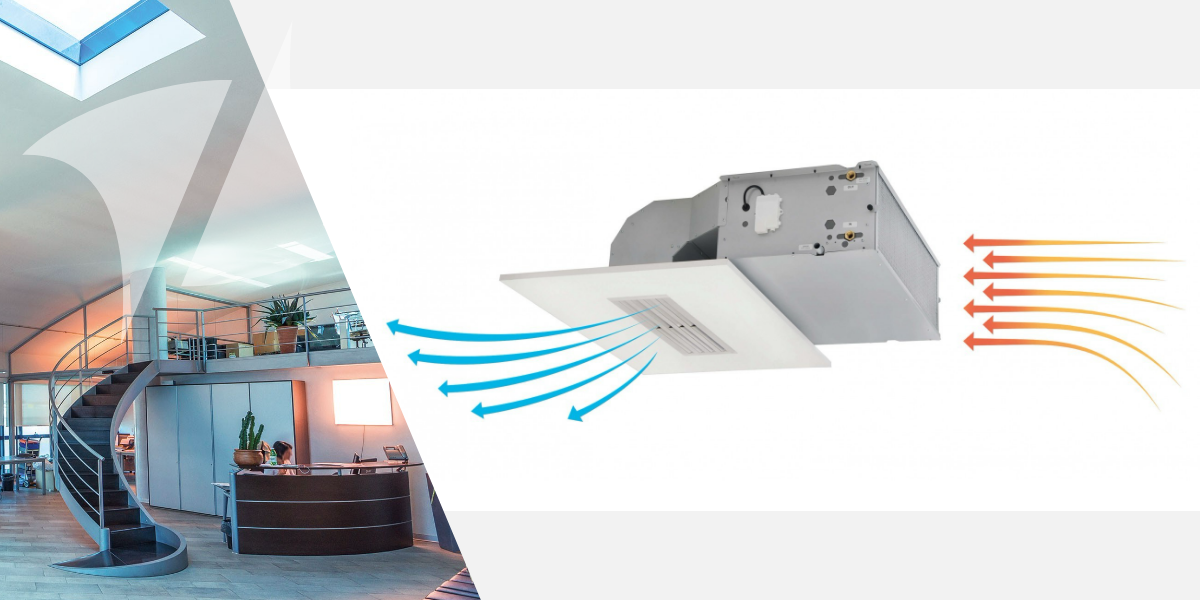
When it comes to air conditioning, attention often focuses on power, efficiency, or generator type. However, one of the most critical, and often overlooked, aspects is how air is distributed within rooms.
Improper diffusion can create uncomfortable drafts, thermal stratification, and uneven temperatures, compromising comfort even with high-performance systems. For this reason, the design of terminals and diffusion systems is crucial, especially in professional or high-traffic spaces.
Coanda Effect: The Principle That Changes Air Distribution
One of the most effective solutions to improve the quality of diffusion is the use of the Coanda effect , a physical principle that allows the air flow to adhere to a surface – in this case the ceiling – and propagate in a controlled manner within the room.
This behavior prevents direct jets of air from hitting people and achieves more uniform distribution, improving comfort in both cooling and heating. The result is a more thermally stable environment, with a widespread and constant feeling of well-being.
Aertesi FCB: advanced diffusion and air flow control
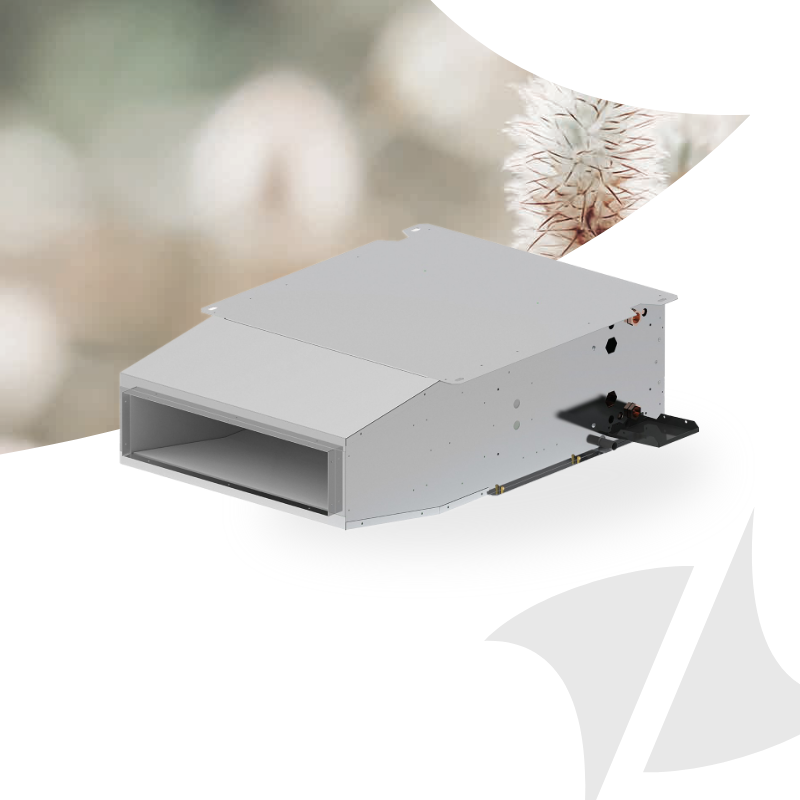
This is the context in which Aertesi's FCB system fits in, a system designed to make the most of the advantages of the Coanda effect in suspended ceiling air conditioning.
The airflow is directed along the ceiling and distributed at a low angle, avoiding direct impact and promoting progressive diffusion. This approach is particularly effective in environments where continuous comfort is required, even with complex layouts or architectural constraints.
A distinctive feature of the system is the ability to adjust the direction of the flow using special slots integrated into the grille. This allows you to adapt the air diffusion to the characteristics of the space, choosing between unidirectional, bidirectional, or, when necessary, vertical configurations.
False ceiling integration and design flexibility
The FCB design is conceived for effective integration into false ceilings , even modular ones, with minimal aesthetic impact and perfect coherence with the internal environments.
This configuration not only optimizes air diffusion, but also maintains a clean visual perception of spaces and allows the system to be adapted to different design needs. The system's flexibility makes it suitable for both new installations and redevelopment projects.
Case study: Aertesi's FCB in the Bledisloe House project in Auckland
A concrete example of the effectiveness of the FCB system is represented by the construction at Bledisloe House in Auckland , a public service centre designed to guarantee high standards of comfort in high-traffic environments.
In this context, the system was installed near the glass surfaces, one of the most critical conditions for managing the internal microclimate. Thanks to its Coanda effect diffusion and the ability to configure the flow in two directions, FCB allows for precise and uniform air distribution, compensating for the temperature variations generated by the transparent facades.
The result is a more balanced environment, where air conditioning isn't perceived as invasive but rather contributes naturally to the occupants' well-being. This type of application demonstrates how FCB isn't just a terminal, but a true design tool for advanced comfort management.
Real comfort: less drafts, more uniformity
The true value of a solution like FCB is measured in the quality of perceived comfort. The combination of the Coanda effect and flow regulation allows for more balanced air distribution , reducing temperature differences between different areas of the room.
This translates into greater thermal stability, improved occupant well-being, and higher perceived air quality—essential elements in contexts such as offices, hospitality facilities, and commercial environments.
Aertesi FCB: an advanced solution for air diffusion
Aertesi's FCB represents an evolution in the way of conceiving air conditioning terminals, shifting the focus from just air emission to its intelligent management within the environment.
Thanks to the Coanda effect, flow regulation and false ceiling design, the system offers a concrete answer to the needs of comfort, flexibility and architectural integration typical of modern HVAC systems.
Aertesi Srl

Available documents
FAQ
Il diffusore FCB è progettato per ambienti terziari come uffici, hotel, sale riunioni e spazi commerciali dove è richiesto un elevato comfort termoigrometrico e una distribuzione uniforme dell’aria. È particolarmente adatto per installazioni a soffitto in impianti HVAC a portata variabile o costante, soprattutto in presenza di esigenze architettoniche integrate.
L’effetto Coanda è vantaggioso quando si desidera evitare correnti d’aria dirette in zona occupata e migliorare la miscelazione dell’aria ambiente. È indicato in ambienti con altezze standard (2,7–3,5 m) dove la diffusione orizzontale consente all’aria trattata di aderire al soffitto e distribuirsi gradualmente, riducendo stratificazioni e discomfort locale.
Il principale vantaggio è la distribuzione omogenea dell’aria grazie all’effetto Coanda, che consente di minimizzare le correnti percepite e garantire temperature uniformi. Inoltre, il design ottimizzato migliora l’induzione dell’aria ambiente, aumentando l’efficienza della miscelazione e contribuendo a un controllo più stabile della temperatura interna.
Rispetto ai diffusori a getto diretto, l’FCB riduce il rischio di correnti fastidiose perché non immette aria direttamente in zona occupata. A differenza dei diffusori a coni regolabili, non richiede regolazioni frequenti per ottimizzare la direzione del flusso, garantendo una distribuzione più stabile e prevedibile in fase di progettazione.
Il diffusore è pensato per installazione in controsoffitto modulare e deve essere correttamente abbinato al plenum per garantire una distribuzione uniforme della portata. In fase progettuale è importante valutare portata d’aria, altezza ambiente e layout degli spazi per sfruttare al meglio l’effetto Coanda. L’integrazione con sistemi VAV richiede particolare attenzione alla regolazione delle portate minime per mantenere l’efficacia della diffusione.
Il diffusore FCB aiuta a risolvere problemi di stratificazione termica, correnti d’aria localizzate e disuniformità di temperatura. È particolarmente efficace in ambienti con carichi variabili o elevata densità di occupazione, dove garantisce comfort anche in condizioni di parzializzazione dell’impianto e contribuisce a migliorare la qualità percepita dell’aria interna.