



Renewables and energy security: Europe accelerates efforts to reduce fossil fuel use
Renewables are becoming a strategic lever to reduce Europe's dependence on gas and oil, contain price volatility, and strengthen energy security.
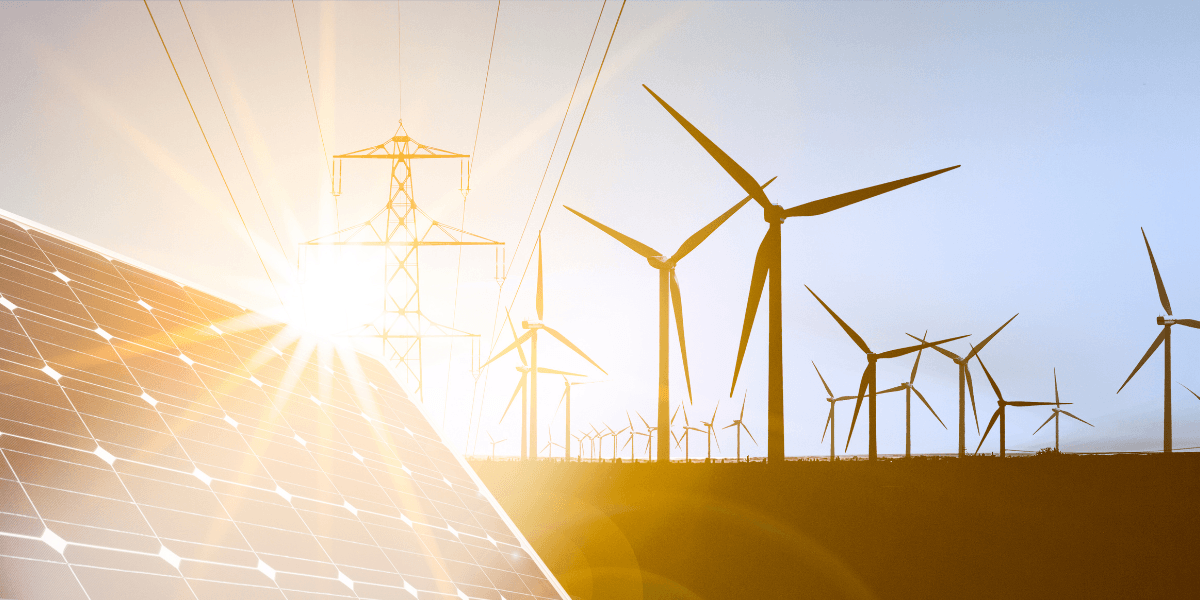
Europe's dependence on gas and oil continues to be a major factor in its economic and industrial vulnerability. Any tension in international energy markets impacts prices, inflation, production costs, and member countries' growth capacity, confirming how the energy transition has become a matter of economic security .
The latest European economic forecasts highlight how the energy shock continues to weigh on the Union's prospects, especially in a context marked by geopolitical instability and supply tensions. In this scenario, reducing dependence on fossil fuels becomes a strategic priority: not only to reduce emissions, but also to contain price volatility and strengthen the European energy system's energy autonomy.
Renewables as a structural response to price volatility
In recent years, Europe has significantly increased its installed capacity from renewable sources , helping to reduce the share of fossil fuel power plants in electricity generation. The growth of solar and wind power has had a direct impact on markets, favoring lower wholesale electricity prices during certain time slots, especially when renewable generation coincides with low demand.
This move confirms a principle that has become central to the energy sector: renewables are not just decarbonization technologies, but tools for system stabilization and resilience. Their very low marginal cost allows for a reduction in exposure to fossil fuels, limiting the impact of external shocks on energy prices.
At the same time, the increased penetration of renewable sources requires careful management of production variability. The transition therefore requires an integrated vision , capable of combining new renewable capacity with:
- more robust and coordinated electrical networks;
- storage systems to balance production and consumption;
- electrification of thermal and industrial consumption;
- intelligent demand management;
- more efficient interconnections between countries and market areas.
For energy and HVAC professionals, this means working in an environment where systems, buildings, and control systems become an active part of the energy balance.
The Italian case: gas still weighs on electricity prices
This issue is particularly relevant for Italy, where the electricity system remains heavily influenced by gas. When gas-fired power plants determine the marginal price of electricity for a large number of hours, international market shocks continue to impact the energy costs of households, businesses, and services with even greater intensity .
The growth of renewables can gradually reduce this dependence, but alone is not enough. Coordinated interventions are needed on infrastructure, storage, simplified permit procedures, grid connections, and the ability to integrate distributed generation, self-consumption, and new electrical technologies.
For the HVAC sector, the connection is direct. The spread of heat pumps, hybrid systems, building automation, storage systems, and systems powered by renewable sources can help reduce the need for fossil fuels in buildings, making consumption management more efficient and air conditioning more sustainable.
The challenge, however, isn't just about installing new technologies. It requires integrated design, assessment of real loads, proper system sizing, and the ability to seamlessly integrate the building, renewable generation, and the electricity grid.
Electrification and networks: the crucial point of the transition
Europe's path to greater energy independence also involves the electrification of consumption. Heating, cooling, mobility, industry, and distributed generation are increasingly interconnected areas, in which the availability of renewable energy can generate tangible benefits only if supported by adequate infrastructure.
Electricity grids thus become the backbone of the transition. Without investments in connectivity, transport capacity, digitalization, and market coordination, the cheapest renewable energy risks not reaching the places it's needed, further increasing dependence on fossil fuels and widening disparities between countries and regions.
For the energy and plant supply chain, this scenario ushers in a phase of profound transformation. Energy security is no longer achieved solely through fuel supply, but through a more flexible, efficient, and distributed system, in which renewables, electrification, and intelligent consumption management become key drivers.
The direction is clear: reducing the burden of fossil fuels means making the European economy less vulnerable to external shocks, more competitive, and more consistent with climate objectives . To achieve this, however, requires continued investment, stable rules, and a technical supply chain capable of transforming the transition into concrete interventions on buildings, plants, and infrastructure.
Related Focus

FAQ
Renewables reduce Europe's exposure to imported gas and oil, limiting the impact of geopolitical shocks, price volatility, and supply tensions. Solar and wind power therefore serve not only to decarbonize electricity generation, but also to make the energy system more stable, predictable, and less dependent on international fossil fuel markets.
The main challenge is the variability of production, which requires more robust electricity grids, storage, efficient interconnections, and intelligent demand management systems. Without these elements, available renewable energy risks not being fully utilized or not reaching where it's needed. For HVAC designers and operators, this means considering the building as an active part of the energy system, integrating systems, regulation, storage, and load flexibility.
The acceleration of renewables is pushing for more electrified, integrated, and controllable systems: heat pumps, hybrid systems, photovoltaic, storage, building automation, and load management are becoming key tools for reducing the need for fossil fuels. Design must be based on real loads, proper sizing, compatibility with the electricity grid, and the system's ability to adapt to the availability of renewable energy and the building's operating conditions.
