



Photovoltaics and end-of-life: disposal and recycling between sustainability and the new challenges of the circular economy.
Managing the disposal of photovoltaic panels is a key challenge for making the renewable energy transition sustainable.
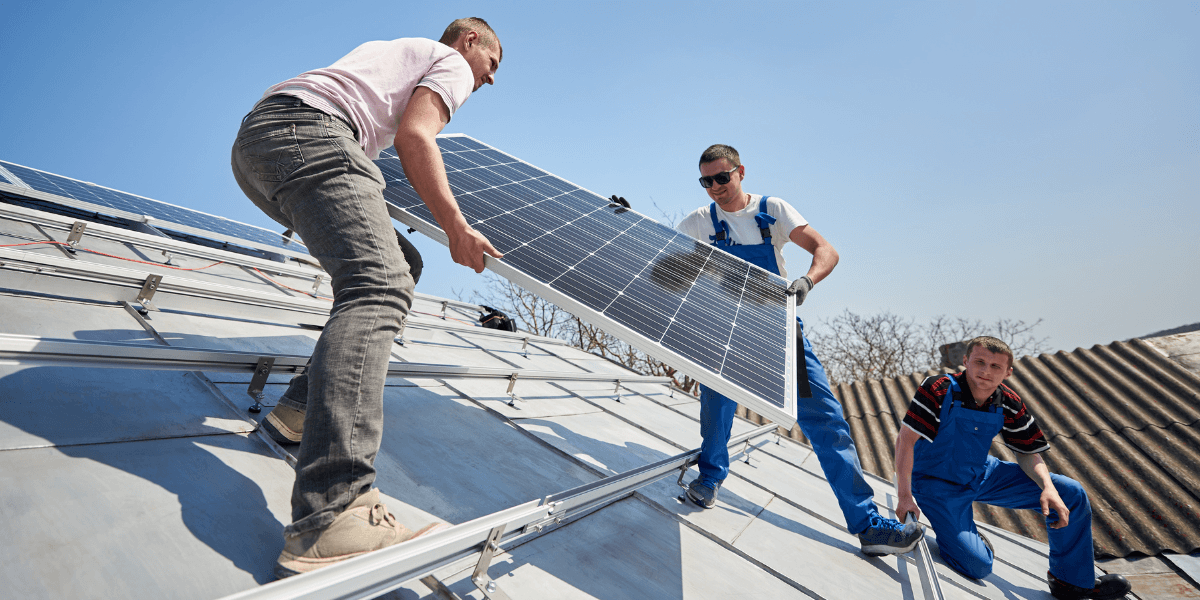
Solar energy has transformed the Italian and European energy system, contributing decisively to the decarbonization of electricity generation . But its extraordinary diffusion is accompanied by an increasingly central issue: the end-of-life of photovoltaic panels . With the massive increase in systems installed over the last two decades, it is urgent to systematically address the management, disposal, and recycling of end-of-life modules.
This is not just an environmental problem, but a crucial element for the overall sustainability of the renewable energy model .
A problem that was foreseen, but not yet fully resolved
Photovoltaic panels have an average lifespan of about 25-30 years , meaning an ever-increasing share of modules is reaching the end-of-life stage. According to the most recent estimates, by 2030, Italy could be dealing with hundreds of thousands of tons of panel waste , significantly impacting collection and treatment systems.
The situation is complicated because photovoltaic modules are made of different materials —glass, silicon, precious metals, and plastics— which require differentiated recovery processes and advanced recycling technologies . If managed properly, these components can be an important source of secondary raw materials, in line with the principles of the circular economy.
Regulations, responsibilities and collection systems
In Italy, the management of end-of-life photovoltaic panels is governed by the WEEE (Waste Electrical and Electronic Equipment) legislation, which places financial and operational responsibility for collection and treatment on manufacturers. However, the practical implementation of these schemes is still incomplete and presents critical issues related to:
- gaps in traceability systems
- collection and transport costs are not always sustainable
- difficulty integrating with existing treatment plants
The regulatory challenge therefore concerns not only the definition of clear rules, but also the creation of an efficient and economically sustainable supply chain for the management of end-of-life panels.
Recycling technologies and opportunities for the supply chain
On the technological front, the recycling sector is making significant progress . Advanced techniques now allow the separation and recovery of high-quality glass, metals such as silver and aluminum, and semiconductor materials with increasing efficiency.
These technologies offer two strategic advantages:
- reduction of the environmental impact linked to disposal
- Recovery of valuable resources within a more sustainable raw materials economy
For the energy plant and services supply chain, the development of a recycling market represents not only a challenge but also an opportunity for innovation and development, with potential positive impacts on employment and related industries.
Impacts on the world of energy systems and energy efficiency
Addressing the end-of-life management of photovoltaic panels means looking beyond installation and energy production. It means extending the perspective to the total cost of ownership of the systems, including all phases of the life cycle: design, operation, maintenance, and decommissioning.
For designers and operators in the HVAC and building sectors, this means integrating knowledge of end-of-life dynamics into their technical choices, favoring solutions that facilitate the recovery and separation of materials at decommissioning.
Towards a truly sustainable energy model
The spread of renewables is one of the pillars of the energy transition , but true sustainability also depends on the ability to properly manage the technological waste they generate. Photovoltaics has enormous environmental and economic potential , but its maturity requires a structured response to the end-of-life challenge.
The path forward involves more effective regulations, competitive recycling chains, and new recovery technologies, with a circular economy approach. Only then can photovoltaics be considered truly sustainable throughout all phases of its technical lifecycle.
Related Focus

FAQ
The photovoltaic industry is facing significant challenges regarding the end-of-life management of solar panels, especially amid massive installation expansion. In industrial, residential, and commercial applications, system design must take into account disposal, recycling, and reuse strategies for materials such as silicon and glass. For HVAC operators, integrating photovoltaics with storage solutions, heat pumps, and energy management systems is essential to maximize efficiency and contribute to material circularity.
The main challenges concern the complexity of the process of recycling composite materials in solar panels, which requires advanced technologies and specialized infrastructure. Furthermore, end-of-life regulations for photovoltaic panels are evolving, with differing regional and international regulations. These aspects require innovations in collection and treatment processes, as well as better integration between local regulations and global industrial practices.
Improved disposal and recycling techniques open up new opportunities for the sector, particularly for the circular economy. The growing demand for raw materials from recycled photovoltaic panels, such as silicon, will help reduce dependence on primary resources and create new industrial supply chains. For the HVAC/R sector, this translates into greater availability of recycled materials for energy components, further contributing to the sector's overall sustainability.
