



Photovoltaic in Italy: Large-scale installations to grow in 2026, residential segment shifts
In 2026, photovoltaic growth is expected, but its structure is changing: residential installations are slowing down and large-scale installations are increasing.
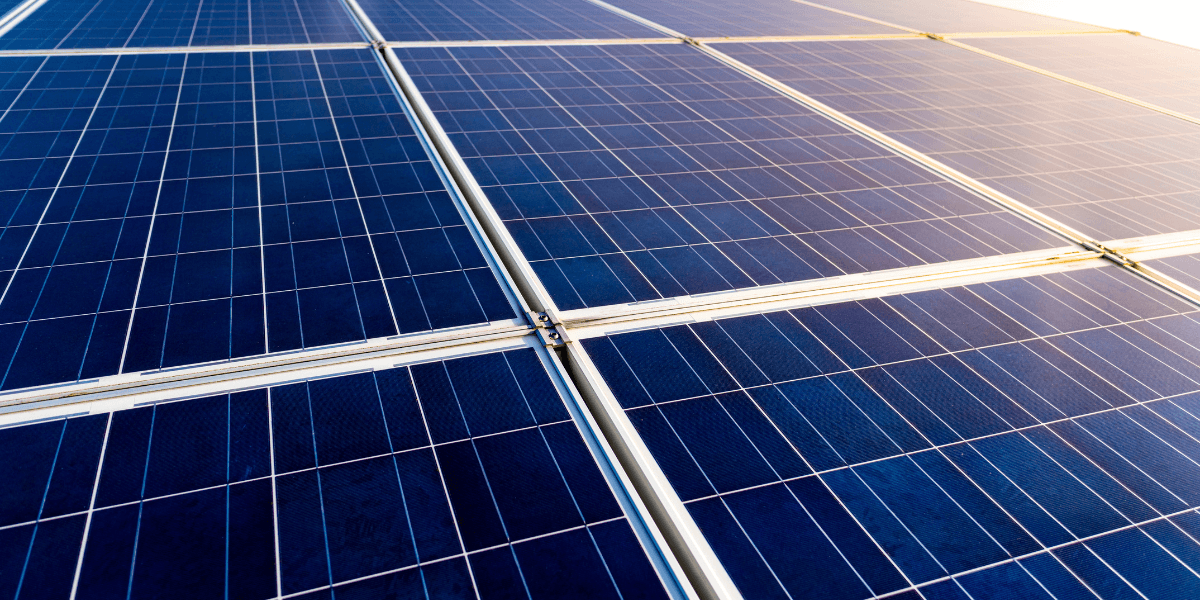
Photovoltaics continues to be a cornerstone of the energy transition , but 2026 opens with a more complex picture than in previous years. After a period of strong growth, driven primarily by incentives, the Italian market is entering a new phase, in which differences between segments and development models are emerging more clearly.
For energy and HVAC professionals, this means dealing with a less uniform environment, where it becomes increasingly important to understand market dynamics and adapt design and commercial strategies.
A positive start to the year, but still below targets
In the first quarter of 2026 , approximately 1.4 GW of new photovoltaic capacity was installed in Italy , a figure that confirms the vitality of the sector but which, at the same time, highlights a pace that is still insufficient with respect to medium-term objectives.
The path to 2030 requires more sustained and consistent growth, capable of maintaining annual levels well above current levels. In this sense, the data from the first few months of the year represents a positive sign, but also an indicator of the need to further accelerate the sector's development.
The market is being redesigned: less residential, more large plants
The most obvious change concerns the market structure. While in recent years the domestic segment had been one of the main drivers of growth, today we are seeing a slowdown , mainly due to the end of more favorable incentive conditions.
At the same time, large photovoltaic systems are assuming an increasingly central role , contributing significantly to new installed capacity. The commercial and industrial segment, on the other hand, maintains an intermediate position, with more stable but less dynamic growth.
The result is a more polarized market, where large-scale projects take center stage while the residential sector enters a phase of normalization. This shift also marks a shift in the type of work required from the supply chain.
New design logics and opportunities for the supply chain
This scenario shouldn't be viewed simply as a slowdown, but rather as a natural evolution of the sector. After years of strong expansion, the market is building on a more solid foundation, with a greater focus on economic sustainability, technological integration, and advanced energy models.
For designers, installers and system integrators, the focus is increasingly shifting towards:
- larger scale and more complex plants
- integration with storage systems
- advanced contractual models , such as PPAs
- energy solutions integrated with other HVAC systems
In this context, photovoltaics is no longer just a technology to be installed, but becomes part of a broader energy system, in which energy production, consumption, and management must communicate effectively.
Related Focus


FAQ
The growth of large-scale photovoltaic systems in Italy is shifting the focus toward utility-scale and industrial applications, also impacting HVAC/R design. In production sites and large buildings, integrating air conditioning systems with centralized generation and storage systems becomes strategic, leveraging economies of scale. This scenario favors collective self-consumption models and microgrid configurations, with direct impacts on the sizing and management of thermal and electrical loads.
The relative reduction in the residential contribution highlights critical issues related to the saturation of incentives, the complexity of authorization requirements, and the reduced economic viability for small systems. From a technical standpoint, this leads to a reduced diffusion of distributed systems combined with domestic heat pumps, slowing the widespread electrification of consumption. Furthermore, the contribution to grid flexibility provided by distributed generation is reduced, increasing the need for centralized energy management.
Design must evolve towards an integrated approach between large-scale energy production and efficient use in HVAC systems. It is essential to adopt advanced EMS to coordinate generation, storage, and consumption, optimizing self-consumption and peak management. Furthermore, it is strategic to design flexible and modular HVAC systems that can adapt to energy availability, improving overall efficiency, operational stability, and economic sustainability.
