



Photovoltaic for businesses and industry: self-consumption and storage become strategic levers
Photovoltaic, storage, and peak shaving help businesses and industries reduce energy costs, increase self-consumption, and better manage loads.
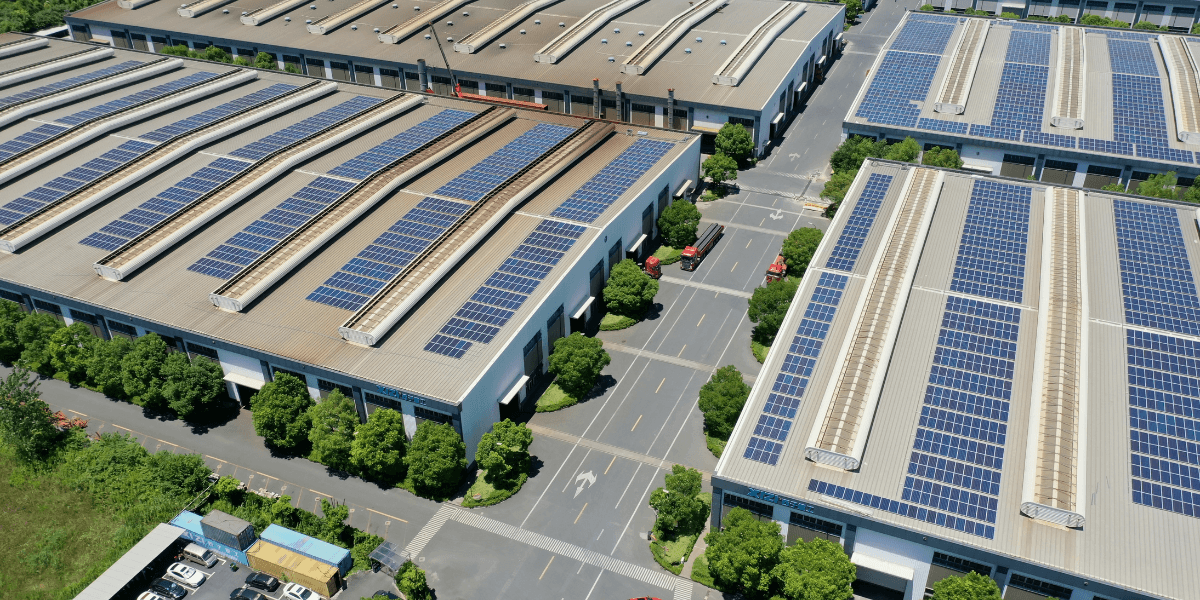
In a context marked by volatile energy prices, geopolitical instability, and growing concern for security of supply, photovoltaics is taking on an increasingly strategic role for businesses and industry . For the manufacturing sector, reducing grid dependence and stabilizing part of energy costs is no longer just an environmental choice, but a lever for competitiveness .
The integration of photovoltaic systems, storage systems, and intelligent energy management tools allows companies to increase self-consumption, reduce energy withdrawals during critical times, and optimize the energy profile of their production site. This is particularly relevant for the Commercial & Industrial sector, where business continuity, electricity costs, and planning capabilities directly impact company margins.
C&I Photovoltaics: An Opportunity to Reduce Exposure and Energy Costs
Photovoltaic systems for businesses and industry can represent a concrete response to rising energy costs . In a tense energy market scenario, Italian manufacturing companies could find themselves incurring significantly higher bills compared to the previous year. This confirms how local energy production can become a tool for economic stabilization for companies .
In the first quarter of 2026, the C&I photovoltaic segment recorded 566 MW installed, equal to approximately 39% of new connected capacity , with 4,251 systems. These figures demonstrate an already significant market, although still with room for growth, especially given companies' sensitivity to energy prices.
For the plant and energy sectors, the value of industrial photovoltaics is not limited to electricity generation. The system becomes part of a broader strategy, which includes consumption profiles, production schedules, contracted power, load management, potential storage, and integration with other high-efficiency systems, such as heat pumps, efficient HVAC systems, and monitoring systems.
Storage, BESS, and self-consumption: photovoltaics become an energy asset
The combination of photovoltaic and BESS storage systems expands the potential for using the energy produced. Batteries allow excess energy to be stored during peak production hours and made available when site consumption increases or when the cost of electricity drawn from the grid is higher.
This is a particularly timely topic: globally, battery storage systems are among the fastest-growing energy technologies. Approximately 108-110 GW of new storage capacity will be installed in 2025, representing a 40% growth compared to the previous year. In Italy, the commercial and industrial segment has also shown positive growth, surpassing residential in terms of capacity in 2025.
Self-consumption remains one of the most effective levers for making the investment cost-effective. It affects not only the energy component of the bill, but also the variable fees associated with other items, such as network charges, dispatching, and taxes. Therefore, at production sites with significant consumption, the design must focus on maximizing the share of energy produced and used directly.
Another significant innovation concerns remote self-consumption, introduced by Legislative Decree 3/2026. Businesses can now use energy produced by systems located elsewhere in the same market zone, without having to rely on the same primary substation. This opens up new opportunities for companies that lack sufficient space at their production site, but can develop photovoltaic systems in other compatible areas.
Peak shaving and intelligent load management
In addition to self-consumption, storage allows for peak shaving strategies , i.e., reducing grid draw peaks during times of greatest demand . In industrial settings, this can be particularly important, as power peaks impact energy costs and can put pressure on the site's electrical infrastructure.
The operation is relatively simple: the storage system stores energy when demand is lowest or when the photovoltaic system produces more than the immediate requirement, and then releases it at peak times . This allows the company to reduce grid draw, optimize the load curve, and improve consumption predictability.
To make this strategy effective, however, simply installing a battery isn't enough. Energy management systems are needed that can coordinate generation, storage, and consumption, evaluating the plant's specific load profile, tariff structure, production cycles, and operational priorities.
The main opportunities for businesses can be summarized in a few key points:
- greater self-consumption of the photovoltaic energy produced;
- reduction of grid withdrawals at peak times;
- better control of energy costs;
- increase the site's energy independence;
- possible integration with heat pumps, efficient HVAC and electric mobility;
- more advanced management of energy flows through digital platforms.
For the HVAC and energy sectors, industrial photovoltaic with storage represents a highly attractive area. Business demand is no longer limited to renewable energy production, but also to the construction of systems capable of ensuring continuity, flexibility, efficiency, and measurable economic returns.
Related Focus


FAQ
Because it reduces grid withdrawal during solar production hours, stabilizes a portion of energy costs, and improves electricity cost predictability. For companies with daytime consumption, warehouses, production facilities, logistics, and commercial facilities, photovoltaic systems sized to actual load profiles can directly contribute to competitiveness, reducing exposure to price volatility and dependence on purchased energy.
Storage is useful when photovoltaic production doesn't fully match a company's consumption, or when it's necessary to manage power peaks, evening time slots, operational continuity, or demand response strategies. Its cost-effectiveness must be assessed based on measured data: load curve, contracted power, production profile, tariffs, instantaneous self-consumption, and the possibility of leveraging stored energy during critical times.
A well-designed strategy can reduce operating costs, improve energy independence, support ESG objectives, and increase a company's resilience to energy prices and availability. For industry, the value isn't just environmental: photovoltaic, storage, and intelligent load management enable better energy spending planning, protecting margins, and making energy-intensive production processes more sustainable.
