



Onshore wind: new guidelines for clearer and more uniform environmental impact studies
The new guidelines for Environmental Impact Assessments aim to make onshore wind projects clearer, more complete and uniform.
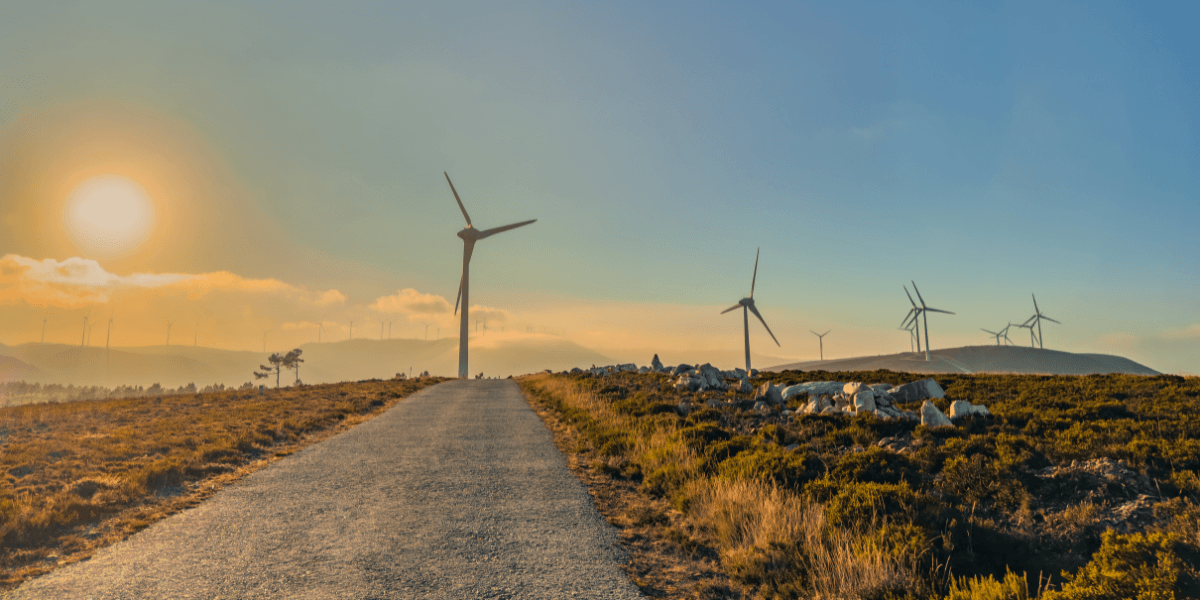
The development of onshore wind power represents a strategic step towards accelerating the growth of renewables in Italy, but it continues to face a key challenge: the quality of authorization processes and environmental studies . In a context where the energy transition requires faster timeframes, greater installed capacity, and better integration of plants across the country, having shared technical frameworks is essential.
The new ISPRA guidelines for preparing Environmental Impact Assessments for onshore wind farms were created with this very goal: to provide a clear and consistent technical and methodological framework for designers, developers, and professionals involved in Environmental Impact Assessment procedures. Following the documents dedicated to photovoltaics and agrivoltaics, the focus now shifts to onshore wind power, a technology expected to significantly contribute to national and European renewable energy targets.
More comprehensive environmental studies to accelerate permitting
One of the most significant aspects is the possibility of making Environmental Impact Assessments more complete, organized, and coherent right from the initial phase of the process . Well-structured SIAs can reduce the number of requests for integration, limit subsequent environmental conditions, and make the evaluation process more efficient.
For the energy sector, this step is particularly important. The slowness of the authorization process is often cited as one of the main obstacles to the construction of new renewable energy plants. The availability of specific guidelines for onshore wind power can therefore help build more robust documentation, capable of promptly responding to the needs of the competent authorities and the affected territories.
The document's value is not only procedural, but also qualitative: standardizing the drafting method improves the comparability of studies, makes impact analysis more transparent, and strengthens the credibility of projects.
Territory, impacts, and monitoring: what's changing for wind projects?
The guidelines emphasize the importance of correctly characterizing the project area, accurately assessing potential impacts, and defining appropriate mitigation measures. For onshore wind farms, this means considering a variety of environmental, landscape, and territorial factors that can impact the project's acceptability and overall sustainability.
Among the most relevant aspects are:
- analysis of the territorial and landscape context ;
- assessment of impacts on biodiversity, habitats and birds ;
- study of cumulative effects with other existing plants or infrastructures ;
- definition of mitigation and compensation measures ;
- environmental monitoring project over time;
- evaluation of design and location alternatives .
Monitoring plays a particularly important role because it allows the project's environmental impacts to be monitored over time, verifying the effectiveness of the planned measures and allowing for any operational adjustments. In this way, the Environmental Impact Assessment (EIA) goes beyond being a formal document, becoming an integral part of the responsible management of the project.
Renewables and design quality: a condition for consensus
The growth of onshore wind requires a balance between energy needs, environmental protection, and territorial acceptability . Decarbonization goals make it essential to increase production from renewable sources, but the quality of projects remains crucial to avoiding conflicts, delays, and local opposition.
For energy professionals, the new approach confirms a clear direction: the transition depends not only on installed capacity, but on the ability to design systems that are consistent with the local environment, rigorously documented, and supported by transparent environmental assessments.
In this scenario, guidelines can become a useful tool for improving dialogue between developers, technicians, administrations, and local communities. A better-reasoned project, based on comprehensive data and a structured impact analysis, has a greater chance of overcoming permit issues and integrating more sustainably into its context.
Onshore wind power remains a key resource for the energy transition, but its development will increasingly require quality design, clear documentation, and environmental monitoring. Only in this way will it be possible to combine accelerating renewables, protecting the environment, and increasing the effectiveness of authorization processes.
Related Focus

FAQ
An effective EIS must characterize the territorial and landscape context, assess the impacts on biodiversity, habitats, and birdlife, analyze the cumulative effects of other facilities or infrastructure, compare design and location alternatives, and define mitigation and compensation measures. For a wind farm, therefore, simply estimating energy production is not enough: it is necessary to demonstrate the project's compatibility with the local area and the most sensitive environmental components.
Shared technical guidelines help designers and developers prepare more complete, organized, and consistent Environmental Impact Assessments (EIAs) right from the initial phase of the permitting process. This can reduce additional requirements, subsequent conditions, and assessment times, increasing the quality of the documentation submitted to the relevant authorities. For onshore wind power, where permitting is often a critical issue, methodological clarity becomes a concrete lever for making projects more easily assessable and less susceptible to delays.
Monitoring allows for the verification of the plant's actual impacts over time and the effectiveness of the mitigation measures envisaged in the Environmental Impact Assessment. This makes the EIS a management tool, not just an authorization document. For developers and operators, it means being able to implement operational corrections, strengthen transparency towards local authorities and communities, and improve project acceptability throughout the plant's entire life cycle.
