



Energy efficiency in Italy: the market will only grow with regulatory stability and structural interventions.
The Italian energy efficiency market is changing: the tertiary and industrial sectors are growing, but regulatory stability and structural interventions are needed.
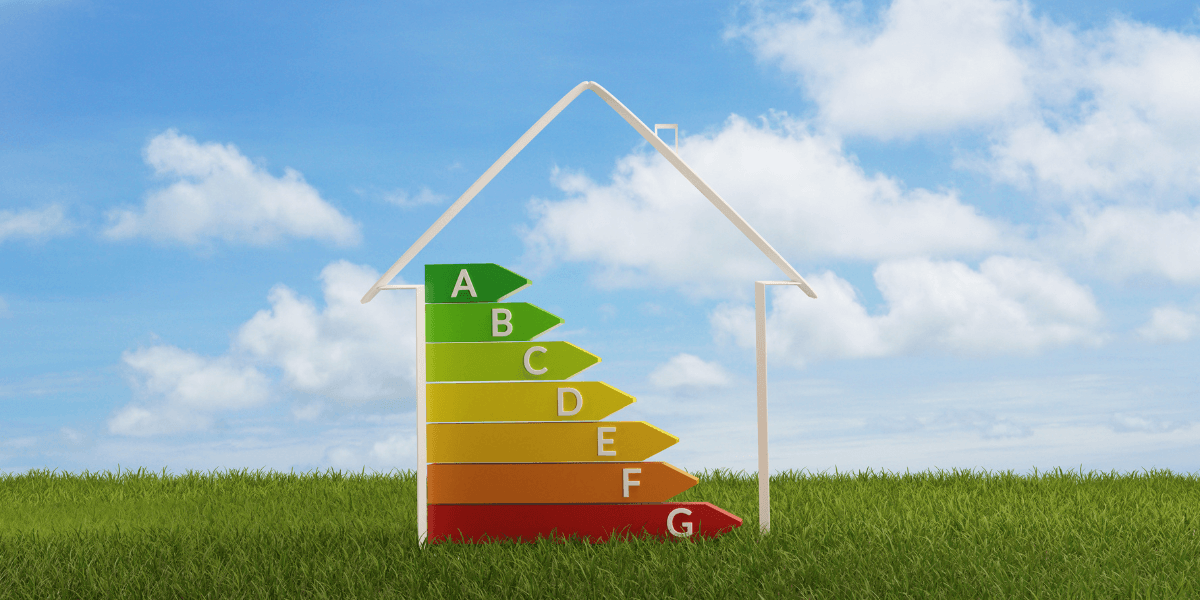
Energy efficiency remains a cornerstone of the transition of Italy's building and manufacturing heritage , but its development continues to depend on the ability to build a stable regulatory framework, truly operational incentive tools, and a technical supply chain capable of supporting the interventions. After the phase heavily influenced by the Superbonus, the market has not stopped, but has changed composition.
In 2025 , overall investments in energy efficiency in Italy will stand between €53 and €62 billion , with a rebalancing of the various sectors: the residential sector is slowing, while the tertiary and industrial sectors are showing signs of growth. The critical point, however, remains the trajectory towards 2030, which without structural interventions risks being insufficient to achieve European targets.
A market changing shape after the Superbonus
The most significant data for 2025 concerns not only the overall volume of investments, but their distribution. The residential sector , which in previous years had concentrated a significant share of investments thanks to building incentives, has fallen from €33-36 billion to €24-27 billion. This expected decline, linked to the gradual exhaustion of the Superbonus effect, raises a key question: what tools will be able to support the redevelopment of private housing stock over time?
At the same time, the tertiary sector continues to show positive growth, rising from €24-28 billion to €25-29 billion. Offices, retail, hotels, and commercial properties are integrating energy efficiency into their asset management and enhancement strategies. Industry is also experiencing growth, from €2.3-2.7 billion to €2.5-3.2 billion, supported by the Transition Plan 5.0 , despite a regulatory framework that is still not fully satisfactory.
For HVAC professionals, this scenario confirms the strategic role of systems in reducing consumption. Energy retrofitting is no longer just about the building envelope or access to incentives, but increasingly includes efficient air conditioning, heat pumps, control, building automation, monitoring systems, and integration with renewable energy sources.
Two scenarios for 2030: the weight of regulatory continuity
The report identifies two possible trajectories for 2030. In the most favorable scenario, aligned with European decarbonization objectives, the energy efficiency market could reach €90-105 billion, with average annual growth of 11% . This scenario, however, requires predictable rules, simplified tools, and consistent incentives.
Without structural corrections, however, the market risks stagnating between €64 and €75 billion, with average growth below 4%, insufficient to close the gap with EU targets. The issue is therefore not only economic, but also organizational and regulatory: measures such as Conto Termico 3.0, Transizione 5.0, and Iperammortamento 2026 can only be decisive if they become simple, timely, and truly usable tools for operators.
The main conditions for accelerating the market can be summarized in a few key points:
- regulatory stability and continuity of incentive instruments ;
- simplification of procedures for businesses, public bodies and citizens;
- greater application clarity for designers, installers and ESCos;
- easier access to funding for complex interventions;
- integration between plant, digital and renewable technologies .
In this framework, energy efficiency cannot be treated as an emergency measure tied to energy price spikes, but as a long-term industrial, real estate, and environmental policy.
Buildings, Industry, and Green Buildings: The Challenge of Deep Redevelopment
The potential for interventions remains very high, especially in the most inefficient commercial and public buildings. Bringing commercial buildings currently classified as F or G into energy class A would require investments exceeding €17 billion, generating savings of approximately 1 Mtoe of primary energy per year, nearly €2 billion less in energy bills, and avoiding over 3 million tons of CO₂.
Hospitals and schools also represent priority areas. For hospitals in energy classes D to G, investments would exceed €580 million, with annual savings of over €110 million and a reduction in emissions of more than 400,000 tons of CO₂. For the 27% of schools that have not yet implemented efficiency improvements, between €6 and €7.5 billion would be needed, with estimated annual savings of between €850 million and €1.1 billion.
The perspective outlined by EPBD IV further broadens the scope: Green Building is no longer just about reducing consumption during the use phase, but about decarbonizing the entire life cycle of the building, from materials to operational management, and finally to the end of its life. In this transition, solutions such as building automation, BIM, digital twins, efficient HVAC systems, heat pumps, energy monitoring, and integration with renewables become essential tools for transforming objectives into measurable results.
For the construction and building services industry, the challenge is therefore twofold: to catch up on existing infrastructure and build a more stable market, less dependent on one-off measures and more oriented toward planned interventions. Energy efficiency can continue to be a driver of growth for the country, but only if accompanied by clear regulations, technical expertise, and a long-term vision.
Related Focus

FAQ
Energy efficiency depends not only on the adoption of higher-performance systems, but also on the ability to systematically address buildings, processes, and energy usage patterns. In HVAC/R, replacing generators or refrigeration units without reviewing the regulation, distribution, or building envelope risks severely limiting the benefits achievable. Structural interventions, on the other hand, maximize the overall return and economic sustainability of the investment.
The constant evolution of incentives, energy requirements, and support tools makes medium- to long-term planning more complex. In HVAC and energy projects, uncertainty can lead to investment postponement or the choice of conservative solutions, reducing the adoption of innovative technologies. Greater regulatory stability, however, favors more ambitious design strategies, geared toward high energy performance and a long-term vision.
Digitalization allows energy efficiency to be transformed from a theoretical objective to a measurable result. Through EMS, BMS, continuous monitoring, and data analysis, it is possible to identify inefficiencies, optimize system operation, and concretely verify the savings achieved. In this scenario, HVAC/R design is evolving towards intelligent and adaptive systems, capable of improving energy performance over time, not just at the time of installation.
