



Housing Plan 2026: Without energy efficiency, the right to housing remains incomplete.
The 2026 Housing Plan can support housing supply, but without energy requalification it risks not having a real impact on housing costs.

The 2026 Housing Plan introduces significant measures for the construction sector and national housing policies. The stated goal is to make approximately 100,000 homes available within ten years , including through the redevelopment of approximately 60,000 currently unused public buildings and the activation of resources of up to €10 billion .
This measure can have positive effects on urban regeneration, the enhancement of existing assets, and the entire construction industry. However, as highlighted by Manuel Castoldi , President of Rete Irene , to assess the Plan's true effectiveness , it is also necessary to consider the energy context within which it is inserted: today, housing shortages are not just about access to housing, but also about families' ability to afford its maintenance costs.
The cost of living is increasingly reflected in bills
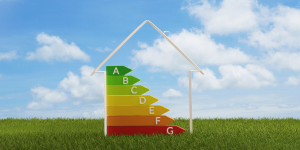
In Italy, a very large portion of the residential stock exhibits insufficient energy performance . Over 70% of residential buildings fall into energy classes E, F, and G , while more than 2 million families live in energy poverty . Added to this is a national energy dependence rate of over 72% , which leaves the system still exposed to price volatility and supply-related imbalances.
In this scenario, increasing the number of available housing units is a necessary, but not sufficient, condition. Affordable housing, in terms of supply, risks not being truly affordable if energy consumption remains high and if utility bills continue to significantly impact family budgets.
For this reason, housing must be considered in conjunction with energy . The quality of living depends not only on the availability of a property, but also on its ability to ensure comfort, reduced consumption, efficient systems, and sustainable management costs.
Energy retrofit: the lever for making housing truly sustainable
Energy retrofitting of buildings is one of the most effective ways to structurally impact the cost of living. Improving building performance means reducing energy needs, containing recurring costs, and improving the quality of indoor environments.
For the HVAC and construction industries, this approach requires an integrated vision, capable of connecting building renovations, building envelope efficiency improvements, and system upgrades. The most effective interventions may include:
- thermal insulation of the building envelope;
- replacement or requalification of air conditioning systems;
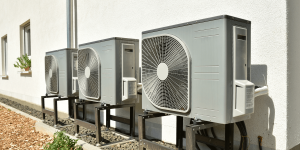
- installation of heat pumps and high-efficiency systems;
- integration with renewable sources and storage;
- building automation and advanced regulation systems;
- consumption monitoring and intelligent energy management.
In this regard, existing tools such as the Conto Termico (Thermal Account) can provide concrete support. This measure mobilizes approximately €900 million annually, with incentives of up to 65% for private individuals and up to 100% for public administrations, supporting renovations to the building envelope and systems with measurable effects on consumption and bills.
An effective housing policy must integrate energy, facilities and urban regeneration
European targets further highlight the need to link the Housing Plan to a coherent energy strategy. Reducing energy consumption in residential buildings will need to reach at least 16% by 2030 and 20-22% by 2035. To achieve these results, simply improving the housing supply will not be enough: structural improvements to the energy quality of the existing building stock will be necessary.
A European comparison confirms this approach. In Spain, the national plan calls for interventions on 7.16 million homes, with a 59.4% reduction in primary energy consumption and investments of approximately €39.35 billion over the period 2026-2030. Beyond the volumes, a difference in methodology emerges: integrated planning between housing and energy policies, explicitly oriented towards reducing consumption.
Field experience also demonstrates the viability of this approach. Between 2021 and 2025, Rete Irene completed 230 retrofit projects on existing buildings, achieving an average efficiency improvement of 68.25% and achieving the highest energy performance classes in over 90% of cases. These results confirm how energy efficiency can produce direct and measurable benefits for the economic sustainability of living.
The Housing Plan therefore represents an important step forward, but to fully realize its potential, it must evolve from a supply-side intervention to an integrated policy for sustainable living. Securing a home is essential; making it efficient, comfortable, and affordable is the key to structurally addressing families' housing well-being.
Related Focus

FAQ
Because increasing the housing supply doesn't automatically guarantee affordable housing. If the renovated or newly built housing continues to consume high amounts of energy, the burden of utility bills can continue to impact housing hardship. The 2026 Housing Plan aims to make approximately 100,000 homes available over ten years, including by renovating approximately 60,000 unused public buildings, but its effectiveness also depends on the energy quality of the renovated housing stock.
Incentives can make projects that would otherwise risk being postponed more accessible, especially in public buildings, condominiums, and energy-intensive residential properties. The Conto Termico (Thermal Account), for example, mobilizes approximately €900 million annually and can cover up to 65% of projects for private individuals and up to 100% for public administrations. In an effective housing policy, financial support should therefore finance not only building renovation but also measurable improvements in energy performance.
The Housing Plan can only contribute if building renovations are linked to energy standards consistent with the European trajectory. The article calls for reducing energy consumption in residential buildings by at least 16% by 2030 and 20-22% by 2035. For the HVAC and construction sectors, this means focusing interventions on more efficient, electrified, regulated buildings that can be integrated with renewables and intelligent energy management systems.
