



Energy investments: the crisis shifts the focus toward electricity, grids, and renewables.
Global energy investments are shifting toward electricity, grids, renewables, and storage, as energy security reprioritizes.
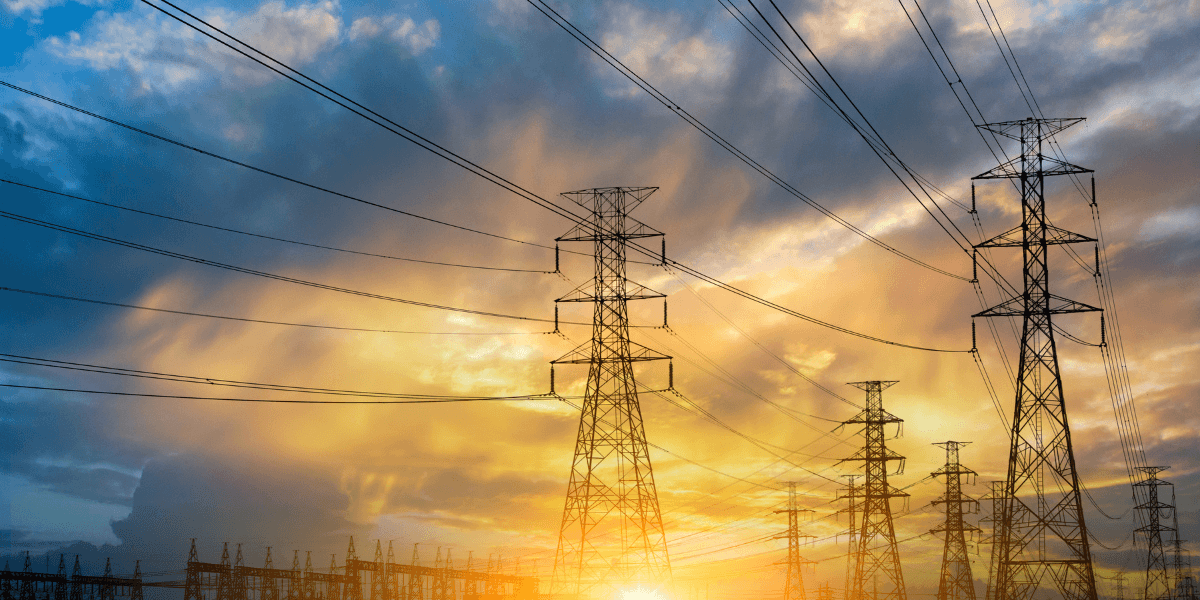
Global energy investments are changing direction. The energy security crisis , the instability of international markets, and the need to reduce dependence on fossil fuels are pushing governments and operators to increasingly focus resources on the electricity sector, renewables, networks, and the electrification of consumption.
Global energy investments will reach approximately $3.4 trillion in 2026. The bulk of this, around $2.2 trillion, will go to electricity grids, renewables, storage, low-carbon fuels, nuclear, energy efficiency, and electrification, almost double the approximately $1.2 trillion projected for oil, gas, and coal.
Electricity becomes the center of new energy security
The electricity sector remains the main investment area for the transition . In 2026, investments in electricity supply and infrastructure are expected to reach $1.6 trillion, rising to $2 trillion if the electrification of end-uses is also included. This figure highlights a profound transformation: energy security is no longer built solely through access to fuels, but through more resilient, flexible electricity systems capable of integrating renewable generation.
Specifically, spending on electricity grids will approach $550 billion, an increase of nearly 20% year-over-year. Battery storage will exceed $100 billion, confirming the growing role of storage in managing renewable energy variability and ensuring system stability.
For the energy and plant engineering supply chain, this scenario opens up new operational priorities:
- strengthening of electricity networks and connection infrastructures ;
- development of storage systems to balance production and consumption;
- electrification of end uses , from buildings to industrial processes;
- integration between renewables, heat pumps and intelligent load management ;
- digitization of energy systems to monitor consumption, flows, and performance.
The transition to electric therefore does not only concern energy production, but the entire architecture of consumption and infrastructure.
Renewables, storage and photovoltaics are leading the transformation
Renewable energy sources will continue to attract a significant share of energy investments. Global spending in the sector is expected to reach approximately $665 billion by 2026, of which over half, or $365 billion, will be allocated to photovoltaics alone.
This data confirms solar's role as a central technology in the new global energy landscape. Photovoltaic , thanks to its competitive costs, rapid installation, and broad scalability, remains one of the most important solutions for reducing dependence on fossil fuels and increasing local clean energy production.
However, the growth of renewables requires adequate infrastructure . Without networks, storage, and flexibility systems, the increase in installed capacity risks not fully translating into benefits for users, businesses, and regions. For this reason , the focus of investments is increasingly shifting toward the entire electricity ecosystem : generation, transmission, distribution, storage, and demand management.
The rapid expansion of data centers and artificial intelligence is also becoming a key driver of electricity demand, especially in the United States. This further reinforces the need to plan more robust energy systems capable of supporting new loads without increasing dependence on fossil fuels.
Fossil fuels, gas, and coal: a transition that's still not linear.
Despite the growth in clean investment, the global picture remains complex. Oil investment is expected to decline for the third consecutive year, falling below $500 billion, while natural gas investment could reach $330 billion, the highest level in a decade, driven primarily by new LNG export projects.
Coal also continues to represent a significant component, with investments estimated at $180 billion in 2026, the highest amount since 2012. China is expected to account for nearly 70% of global spending on coal procurement. Furthermore, some Asian countries may choose to keep existing coal-fired power plants operating longer to strengthen energy security.
These data show that the energy transition is not proceeding uniformly . On the one hand, spending on electricity, networks, renewables, and efficiency is growing; on the other, geopolitical uncertainty continues to drive investments in fossil fuel infrastructure, especially where security of supply remains an immediate priority.
For the HVAC and energy sectors, however, the long-term direction remains clear: the progressive electrification of consumption and the growth of renewables will make the role of efficient systems, heat pumps, control systems, storage, and intelligent energy management increasingly central. The challenge will be to transform global investments into concrete interventions capable of reducing consumption, emissions, and energy vulnerability.

Related Focus

FAQ
The energy crisis has highlighted the risk of reliance on imported fossil fuels, subject to price volatility and geopolitical instability. For this reason, the focus of investment is shifting toward technologies that increase autonomy, security, and decarbonization: renewable generation, electrical infrastructure, storage, electrification of consumption, and intelligent energy management systems.
Grids must manage a growing share of variable renewable generation and increasingly electrified demand. Air conditioning, domestic hot water, industrial processes, and electric vehicle charging increase the need for flexibility, monitoring, and control. Investing in grids therefore means enabling the integration of distributed generation, storage, active buildings, and new consumption profiles.
The main critical issues concern authorizations, connection times, grid adaptation, storage availability, peak management capacity, and coordination between distributed generation and demand. Without more robust and digitalized grids, the growth of photovoltaic, wind, heat pumps, and electric mobility could generate congestion and limit the full utilization of renewable energy produced.
