



Ecomondo 2026: the ecological transition is increasingly global and transversal.
Ecomondo 2026 returns to Rimini from November 3 to 6, focusing on the green economy, bioenergy, water, textiles, AI, and circularity.
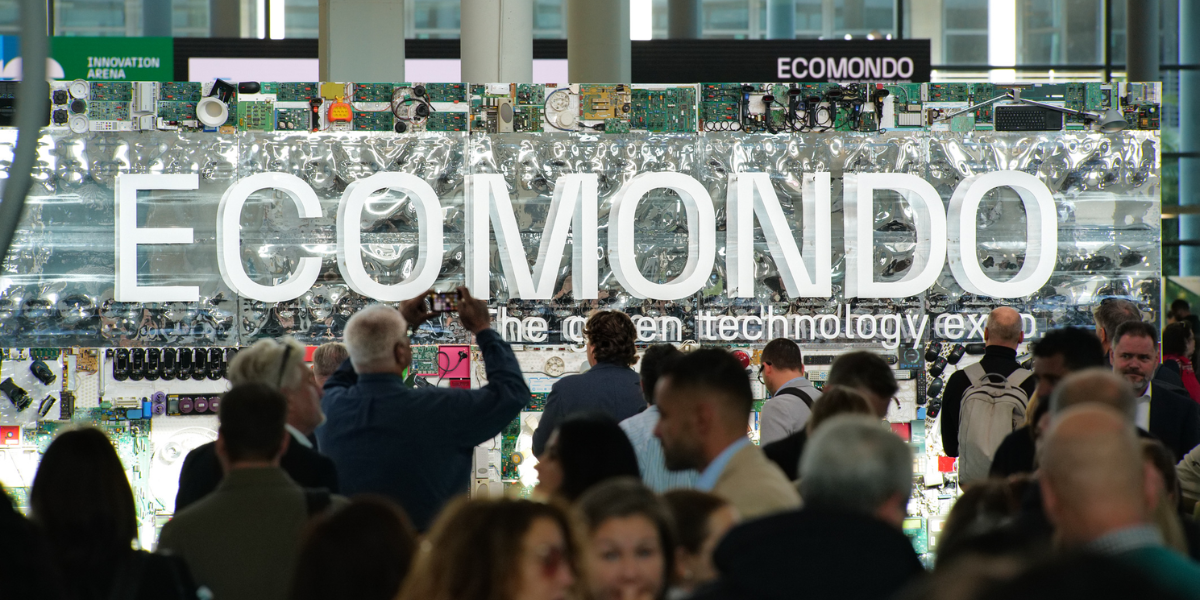
From November 3 to 6, 2026 , Rimini Fiera will host the 29th edition of Ecomondo , Italian Exhibition Group's international event dedicated to the green, blue, and circular economy. Year after year, this event strengthens its role as a reference platform for industries, institutions, research, policymakers, innovative companies, and operators committed to the ecological transition.
In a scenario marked by the acceleration of European policies on sustainability, circularity, resource management, and decarbonization, Ecomondo 2026 presents itself with an even more international, innovative, and transversal approach. The goal is to create an ecosystem capable of fostering discussion, business, cooperation, and the development of new solutions to support the transformation of global markets .
An international platform for green economy and innovation
The new edition aims to further strengthen its international reach , involving buyers, delegations, and associations from various continents. This expansion will also be supported by a multi-stage roadshow, which will include countries such as Spain, Morocco, Germany, Hungary, and Canada, with the aim of consolidating institutional and commercial relations.
Alongside the Italian event, the international network associated with the event also includes initiatives such as Ecomondo Mexico, Ecomondo China, and the Green Med Expo & Symposium in Naples. This strategy confirms the desire to position Ecomondo as a global hub for environmental technologies, circularity, and the ecological transition.
For the energy and plant engineering sectors, this evolution is particularly relevant. The environmental transition no longer concerns isolated sectors, but involves diverse and increasingly interconnected supply chains: resource management, bioenergy, water, material recovery, environmental monitoring, circular cities, artificial intelligence, and digital technologies.
European regulations, bioenergy and circular cities among the thematic focuses
The Ecomondo 2026 conference program will include summits, conferences, and meetings held in English, with a particular focus on key European regulatory dossiers. Announced topics include the Circular Economy Act, the Bioeconomy Strategy, the Biotech Act II, the Pact for the Mediterranean, the RESourceEU Action Plan, the Critical Raw Materials Act, and new provisions on Extended Producer Responsibility.
The event will also dedicate space to central themes for the ecological transition and the development of low-emission production systems , including:
- bioeconomy and bioenergy , as strategic supply chains for valorizing renewable resources and more circular production models;
- healthy and circular cities , with attention to urban quality, resource management and territorial resilience;
- artificial intelligence and digital technologies , applied to environmental monitoring, efficiency and management;
- international cooperation , with particular reference to the Mediterranean and Africa;
- green economy and new industrial models , increasingly linked to innovation, sustainability and competitiveness.
The first two days will also feature the Green Economy General Assembly, organized by the Foundation for Sustainable Development in collaboration with the Ministry of the Environment and Energy Security, with a second plenary session held entirely in English.
New layout and evolving supply chains: textiles, water, and resource regeneration
Among the most significant innovations of the 29th edition is the new exhibition sector dedicated to Textiles, which will have an entire pavilion dedicated to it. The area will be designed as an international hub for a supply chain currently at the center of significant regulatory and industrial transformations related to material sustainability, circularity, and environmental responsibility.
The space dedicated to the Waste as Resource sector is also growing, while the Water Cycle & Blue Economy segment will be reorganized with the Blue Economy and Trenchless Districts. These areas will focus on wastewater recovery and reuse, No-Dig technologies, pumps, valves, control systems, and intelligent network monitoring.
For energy, environmental, and plant engineering professionals , these are increasingly interconnected issues. Efficient water resource management, material recovery, bioenergy production, and environmental monitoring are part of an integrated vision of the transition, in which infrastructure, technologies, and industrial processes must contribute to reducing impacts, consumption, and waste.
Ecomondo 2026 thus confirms its position as a privileged observatory on the changes in the green economy. Not just a trade fair, but a platform for discussion between businesses, institutions, research, and innovation, capable of connecting major environmental challenges with technological and industrial solutions already available or under development.
Related Focus

FAQ
Ecomondo 2026 confirms that the ecological transition is no longer about isolated technologies, but rather integrated supply chains: energy, water, bioenergy, material recovery, circular cities, environmental monitoring, and artificial intelligence. For HVAC designers and operators, this means viewing the building and system as part of a broader system, in which efficiency, resources, digitalization, and decarbonization must be coordinated from the design stage.
The most relevant topics are bioenergy, efficient water resource management, digital technologies, environmental monitoring, pumps, valves, control systems, and solutions for more resilient networks and infrastructure. Specifically, the Water Cycle & Blue Economy segment will be reorganized with a focus on wastewater recovery and reuse, No-Dig technologies, and intelligent network control, areas increasingly linked to energy and plant design.
The event's evolution reflects an increasingly international, regulatory, and cross-sector transition. The announced focuses include the Circular Economy Act, the Bioeconomy Strategy, the Critical Raw Materials Act, Extended Producer Responsibility, cooperation with the Mediterranean and Africa, AI applied to efficiency, and new industrial models. For technical companies, this means preparing for measurable, interoperable solutions consistent with the objectives of circularity, reduced consumption, and sustainable resource management.
