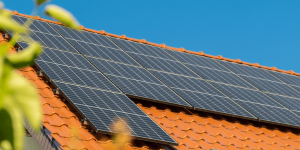
2026 Budget: Super Amortization and Photovoltaic, New Levers for Energy Investments
The super-amortization program provided for in the 2026 Budget Law boosts investments in photovoltaic and self-generation, with direct benefits for energy efficiency and systems.

The 2026 Budget Law introduces a new incentive framework that could significantly impact companies' investment decisions.
Among the most significant measures for the energy and plant sector, the super-depreciation for capital goods related to the energy transition stands out, which also involves photovoltaic systems and self-generation technologies.
This opportunity should be viewed not only from a fiscal perspective, but also as a tool to accelerate energy efficiency and the electrification of consumption.
Super-amortization 2026: What's new for photovoltaic investments?
The super-depreciation program provided for in the 2026 Budget Law allows businesses to increase the tax-deductible value of investments in new capital goods , directly reducing their tax burden. The measure also includes photovoltaic systems and solutions related to self-consumption , provided they are functional to the business's activity.
For companies, this means being able to plan interventions on industrial roofs, warehouses, and operational headquarters with greater economic sustainability. Photovoltaics is no longer seen simply as an environmental choice, but as a strategic asset, capable of improving competitiveness by reducing exposure to energy costs.
Self-production, efficiency and integration with plants
The value of super depreciation increases further when included in an integrated energy vision. Installing photovoltaic systems can become the first step in a broader process that involves storage systems, intelligent load management, and integration with HVAC systems.
For the world of air conditioning and energy efficiency , this measure represents an opportunity to rethink the relationship between energy production and consumption within buildings.
Self-generation from photovoltaic systems can support the electrification of heating and cooling systems, making solutions like heat pumps more sustainable and reducing the need for energy drawn from the grid.
An incentive that guides business choices
The 2026 Budget confirms how fiscal instruments are becoming central levers for driving the energy transition .
Super depreciation doesn't just encourage individual investments, it also directs corporate strategies toward more efficient energy models based on self-generation, reduced consumption, and greater cost control.
For designers, installers, and energy sector operators, this scenario opens up new opportunities for consulting and integrated design.
Understanding how incentives work and being able to translate them into coherent technical solutions becomes a fundamental added value in supporting companies in making long-term decisions.
Photovoltaics and industrial policies: an evolving scenario
The 2026 super-depreciation is part of a broader context of policies aimed at energy sovereignty and emissions reduction.
Despite specific constraints and requirements, the measure points to a clear direction: supporting investments that strengthen companies' energy autonomy and make the production system more resilient.
In this context, photovoltaics continues to confirm its role as a key technology, not only for the production of renewable energy, but also as a structural element of corporate energy strategies.
Related Focus