Biofilm in AHU coils: Light Progress' UV-C solution for efficiency and air quality
UV-C technology applied to AHUs helps prevent biofilm on coils, improving energy efficiency, maintenance and indoor air quality.
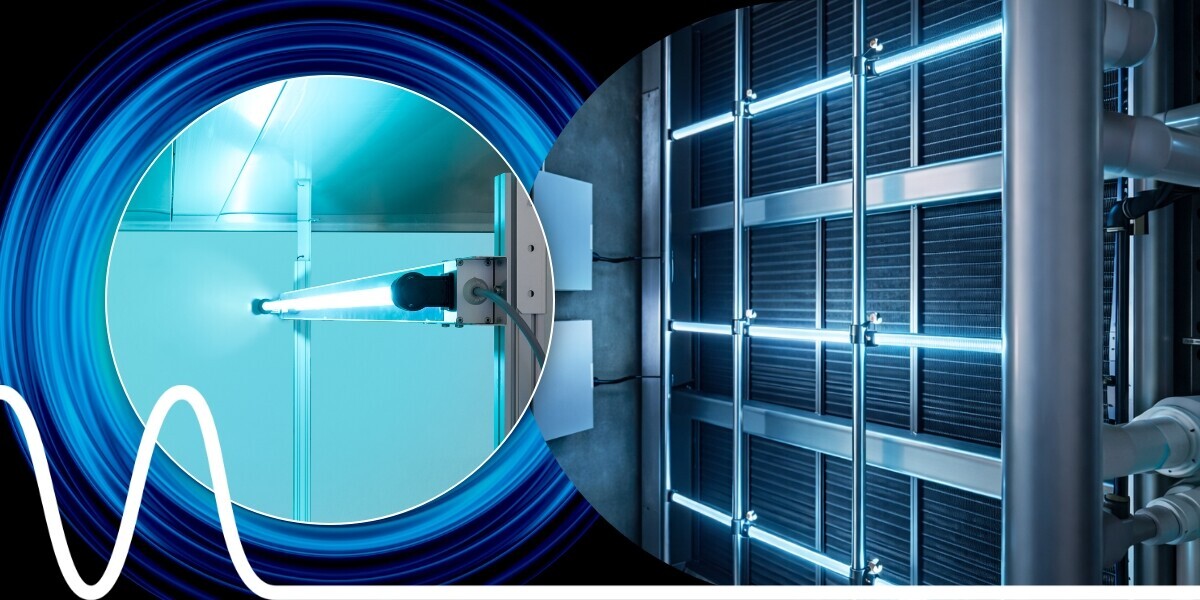
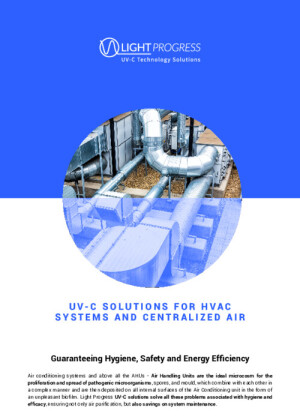
In air handling units, performance degradation isn't always due to obvious failures or obsolete components. In many cases, a significant part of the problem stems from a silent and progressive phenomenon: the formation of biofilm on the heat exchange coils.
Humidity, darkness, condensation, and temperature fluctuations create favorable conditions for the proliferation of bacteria, mold, spores, and microorganisms within AHUs. These elements can settle on the system's internal surfaces, particularly on the finned coils, forming a biological layer that can impact energy efficiency, maintenance, and indoor air quality.
Even when it is not immediately visible, biofilm can alter the correct functioning of the system: it reduces heat exchange, increases pressure drops and forces fans, pumps and chillers to work harder to maintain design conditions.
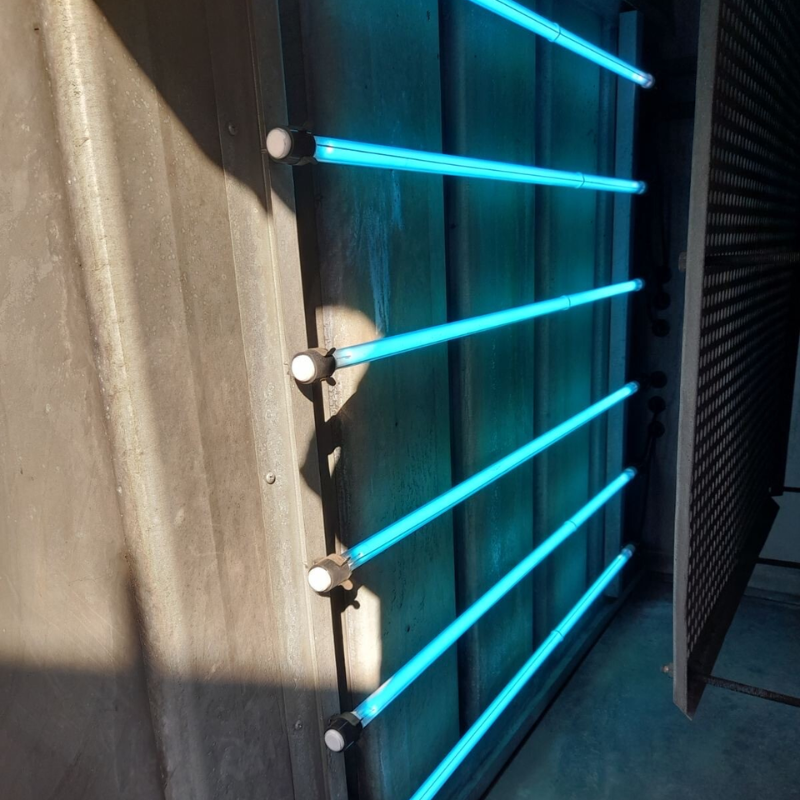
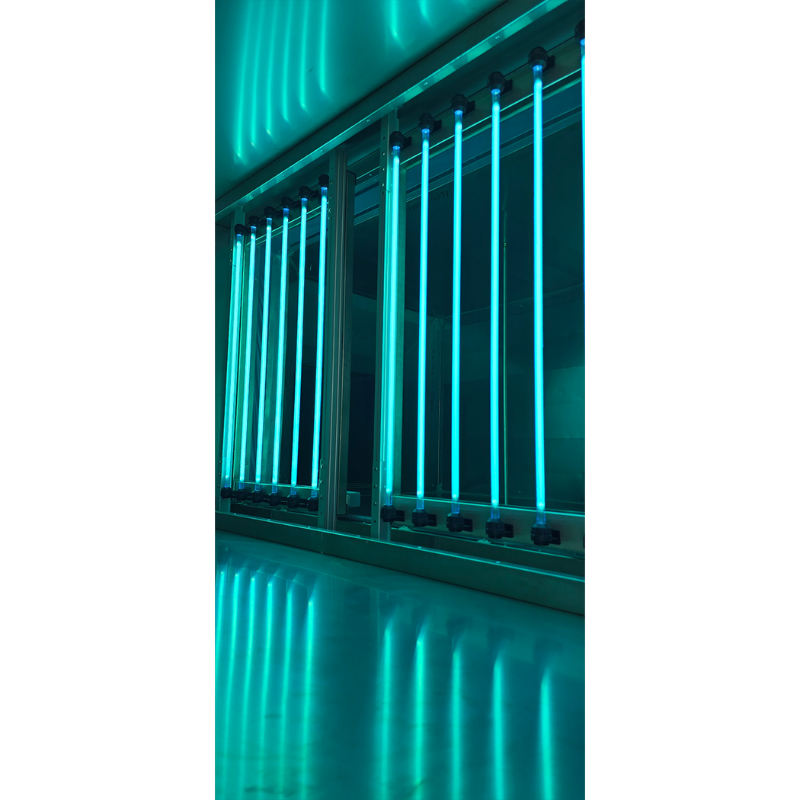
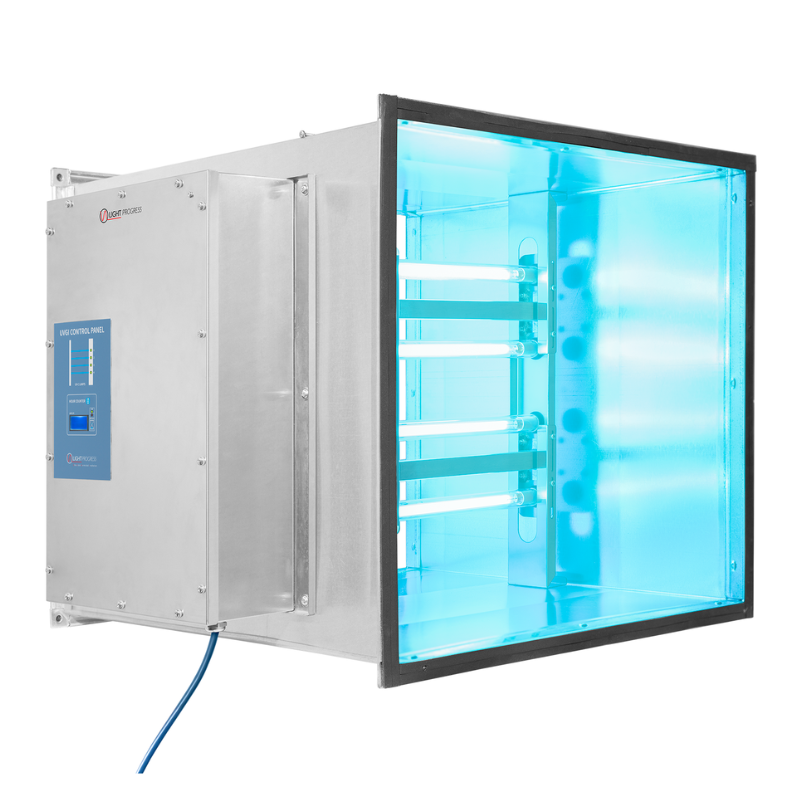
This is the context in which Light Progress' UV-STICK-SCR comes into play, a UV-C solution designed for installation inside Air Handling Units and conceived to keep the most critical surfaces of the system biologically clean, starting with the heat exchange coils.
From biofilm to efficiency: why continuous prevention improves AHU performance
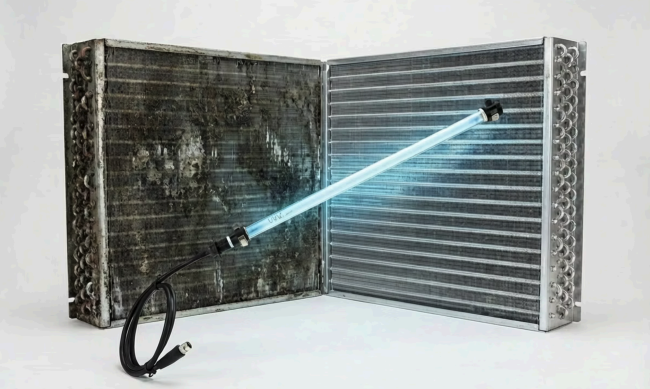
Biofilm isn't just a simple dust deposit. It's a living microbial matrix , capable of regenerating and adhering to surfaces, especially in the presence of constant humidity. In AHU coils, this condition can become particularly critical because finned surfaces, condensate collection trays, filters, and cooling sections represent ideal environments for microbiological growth.
The problem isn't just about system hygiene. When biofilm builds up on the coils, even in very thin layers, it can compromise heat exchange. The coil operates less efficiently, the chiller must produce more energy to reach the same setpoints, the fans must compensate for higher pressure drops, and the entire system tends to consume more power.
The result is a cycle of progressive inefficiency: the system continues to operate, but does so at lower performance than designed. This can result in higher energy consumption, more frequent maintenance, reduced component lifespan , and worsened indoor air quality.
Chemical and mechanical cleaning of coils remains an important part of maintenance programs, but it has a clear limitation: it works intermittently. After each intervention, microbial regrowth can resume, especially in areas most exposed to humidity and condensation.
For this reason, continuous prevention through UV-C technology can offer concrete support to system management. Cleaner coils promote more efficient heat exchange, help the system operate in conditions closer to design, and contribute to reducing the pressure on maintenance activities.
In terms of indoor air quality, microbiological monitoring of the internal surfaces of AHUs allows for intervention at source. This is particularly important in high-traffic buildings and sensitive environments, where IAQ management is integral to the safety, comfort, and well-being of occupants.
Biofilm in coils: a seemingly small impact
< 0.5 mm
the thickness of biofilm which can already compromise the performance of the system
up to 40%
the possible reduction in the efficiency of the system
24/7
the continuous monitoring necessary to combat microbiological regrowth
Biofilm can increase the strain on chillers, pumps, and fans, impacting energy consumption, maintenance, and indoor air quality.
UV-C technology, retrofit and UV-STICK-SCR: an upgrade for existing AHUs
UV-C technology uses germicidal ultraviolet radiation to act directly on microorganisms, reducing their ability to proliferate on the system's internal surfaces. When applied in air handling units, it allows for continuous treatment of the most critical areas, such as coils, filters, condensation pans, and sections subject to high humidity.
Unlike chemical treatments, UV-C technology leaves no residue, does not introduce substances into the treated air, and does not require system downtime. This makes it a useful addition to routine maintenance, especially in contexts where operational continuity, energy efficiency, and indoor air quality are key factors.
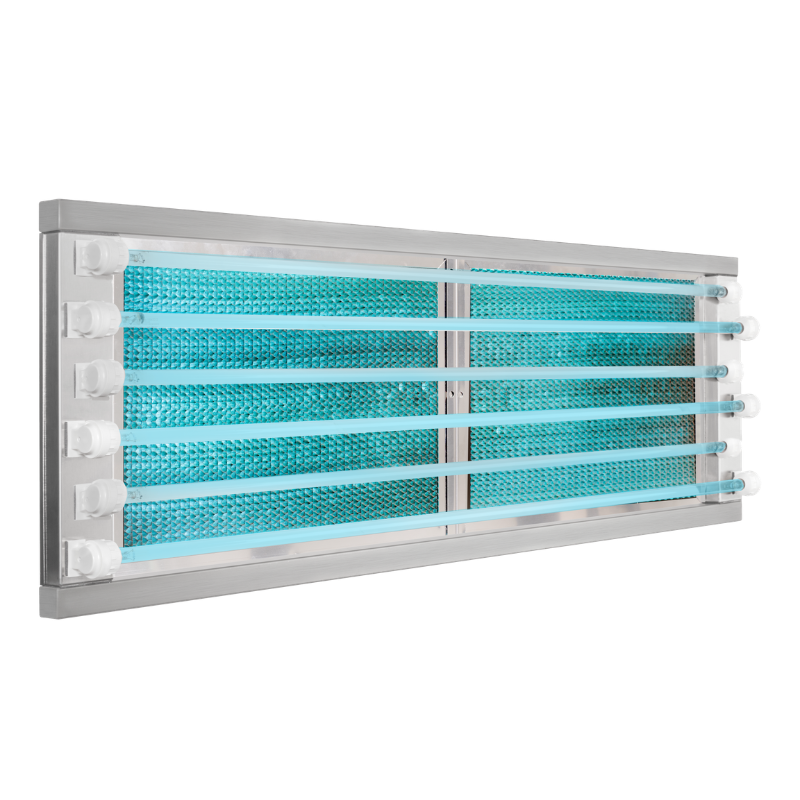
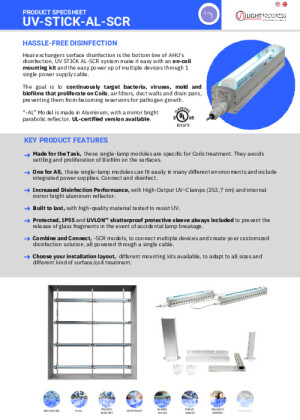
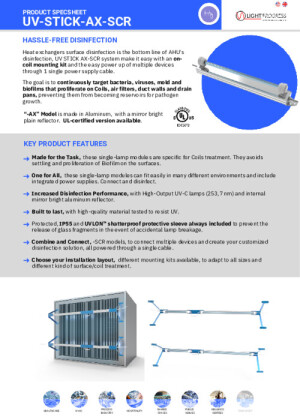
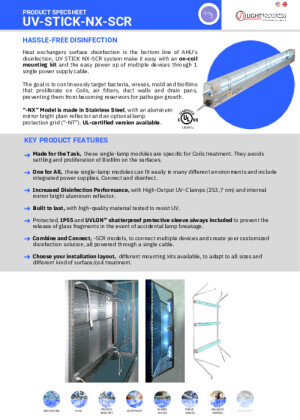
To meet these needs, Light Progress has developed UV-STICK-SCR , a UV-C system designed for installation inside AHUs and intended for the continuous treatment of internal surfaces. The device is compact, has high germicidal power, and is available with an AISI 304 stainless steel or anodized aluminum frame and with lamps ranging from 50 to 160 cm, making it suitable for a variety of system configurations.
The IP55 -rated body makes it suitable for environments subject to humidity and temperature variations, while the serial connection system simplifies installation even in confined spaces. The range includes three main variants:
- UV-STICK-AL-SCR, with parabolic mirror reflector;
- UV-STICK-AX-SCR , with flat reflector in polished aluminum;
- UV-STICK-NX-SCR , with AISI 304 stainless steel structure and optional lamp protection grille.
One of the most interesting aspects concerns HVAC retrofitting : integrating UV-C systems allows you to improve the performance of your existing system without replacing the entire AHU. This is therefore a technical upgrade with low operational impact, useful for strengthening microbiological control of surfaces, supporting coil efficiency, and integrating continuous disinfection into existing maintenance programs.
Studies, IAQ and international technical references
The effectiveness of UV-C technology applied to HVAC systems has been analyzed in several independent studies, which evaluated both energy and indoor air quality effects.
Among the most significant findings, a study conducted at a Michigan medical center found an improvement in the thermal conductance of coils and a reduction in energy consumption associated with chillers, pumps, and fans. The ASHRAE RP-1738 project confirmed the impact of UV-C technology on coil performance, highlighting a reduction in pressure drops and an improvement in the heat transfer coefficient. Regarding indoor air quality, a clinical study published in The Lancet observed a reduction in microbial contamination and an improvement in symptoms reported by workers exposed to air treated with UV-C systems installed on AHU coils.
What studies on UV-C technology show
+36.7%
improvement of the heat transfer coefficient
-22.7%
reduction of pressure drops
+3-7%
improved heat transfer in condensation
49%
ROI detected in the study on UTA in the medical field
This evidence confirms that UV-C treatment of internal surfaces of AHUs should not be considered only a hygienic measure, but a technology capable of also contributing to the stability of the system's performance, management of operating costs and improvement of IAQ.
The topic also fits into a broader framework related to indoor air quality and building health. There is no specific LEED credit dedicated to UV-C technology, but the US Green Building Council cites industry technical resources related to indoor air quality, including the IES guidelines on UV germicidal disinfection. ASHRAE also recognizes UVGI among the technologies that can be used in HVAC systems for air and surface disinfection. These references are not a regulatory requirement, but they help strengthen UV-C technology's position as a recognized technical solution in the indoor air quality landscape.
Applications in AHUs and Light Progress expertise
The effectiveness of a UV-C system depends on the proper design and placement of the lamps. Within AHUs, the most relevant application areas are the heat exchange coils , where biofilm directly impacts efficiency and pressure drops, the condensate collection tanks, the cooling and dehumidification sections, and, more generally, the internal areas most exposed to humidity and organic buildup.
UV-C technology can also be integrated as a post-cleaning reinforcement , to maintain the results of mechanical or chemical sanitization interventions for longer and slow down the regrowth of biofilm between one maintenance cycle and the next.
Light Progress has been designing and manufacturing UV-C systems in Italy since 1987, with applications in HVAC, medical, food, and industrial environments. This experience, combined with ISO 9001:2015 certification, is a significant asset for those integrating UV-C technologies into complex systems, where simply installing a lamp is not enough; dose, positioning, operating conditions, and treatment objectives must be carefully considered.
In the case of AHUs, this expertise translates into solutions like UV-STICK-SCR , designed to integrate into the system's technical management and help maintain performance, hygiene, and operational continuity. For modern buildings, where energy consumption, indoor comfort, and health and safety responsibilities are increasingly intertwined, preventing biofilm formation is not just a good maintenance practice, but a technical choice for managing systems more efficiently, safely, and sustainably over the long term.
Light Progress