



Focus Around the world
This article is over 3 years old
World's most efficient solar cell comes from Australia
Twenty years after its first invention, the Australian research team was able to double solar cells efficiency up to 40%, thanks to a particular bandpass optical filter. Towards cheaper renewable energy?
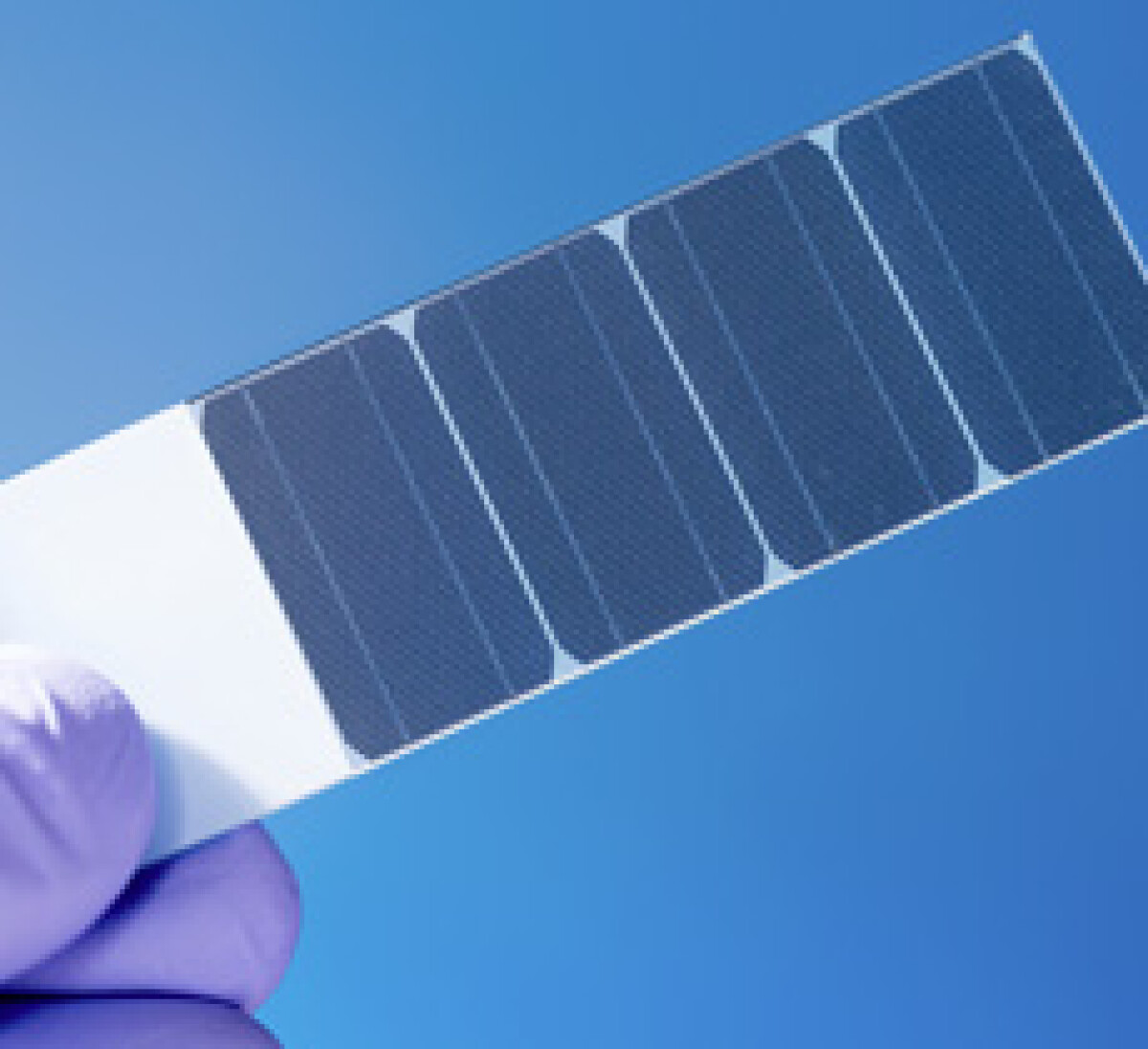
On 8 December 2014 at the Australian Institute of Renewable Energy, world's most efficient solar cell was presented: being capable of converting more than 40% of sunlight into electricity, the brand new cell set an efficiency record which had never been achieved before.
The Australian research team, whose work was funded by various partners, such as Arena (Australian Renewable Energy Agency), Ausiapv (Australia-US Institute for Advanced Photovoltaics), RayGen Resources and Spectrolab, announced the incredible record reached after dutiful checks and outdoor tests conducted in the city of Sydney and in the United States.
The result, formalized through a note on UNSW Australia website, will soon be published in the prestigious journal “Progress in photovoltaics” and, as confirmed by the project leader himself, Dr. Mark Keevers, the new super-efficient solar cells will be "readily accessible to the solar industry".
The Australian research team is not new to this kind of primates, since in 1989 it created the first photovoltaic system capable of converting more than 20% of solar energy into electricity, a percentage clearly doubled in just two decades.
In addition to this, just a few months ago, the Australian consortium CSIRO announced the creation of printable organic solar cells with efficiency over 10% compared to silicon modules. The only down side was the duration, an issue concerning photovoltaic panels as a whole, Australians as well as Italian.
The latest discovery in order of time achieved by the Australian research team, as explained by Professor Martin Green, best known as the "Father of photovoltaics" and Director of the Australian National Energy Agency, consists in the use of a particular bandpass optical filter which, when applied to commercial solar cells, is able to capture the sunlight normally dispersed by them and to convert it into electricity, at significantly higher efficiency compared to more traditional solar cells.
Hopefully, this innovation could be quickly transformed from prototype to reality and solar business, increasing in competitiveness and efficiency, could make the cost of energy derived from renewable sources, a resource destined to mark the future of the planet, more affordable worldwide.
The Australian research team, whose work was funded by various partners, such as Arena (Australian Renewable Energy Agency), Ausiapv (Australia-US Institute for Advanced Photovoltaics), RayGen Resources and Spectrolab, announced the incredible record reached after dutiful checks and outdoor tests conducted in the city of Sydney and in the United States.
The result, formalized through a note on UNSW Australia website, will soon be published in the prestigious journal “Progress in photovoltaics” and, as confirmed by the project leader himself, Dr. Mark Keevers, the new super-efficient solar cells will be "readily accessible to the solar industry".
The Australian research team is not new to this kind of primates, since in 1989 it created the first photovoltaic system capable of converting more than 20% of solar energy into electricity, a percentage clearly doubled in just two decades.
In addition to this, just a few months ago, the Australian consortium CSIRO announced the creation of printable organic solar cells with efficiency over 10% compared to silicon modules. The only down side was the duration, an issue concerning photovoltaic panels as a whole, Australians as well as Italian.
The latest discovery in order of time achieved by the Australian research team, as explained by Professor Martin Green, best known as the "Father of photovoltaics" and Director of the Australian National Energy Agency, consists in the use of a particular bandpass optical filter which, when applied to commercial solar cells, is able to capture the sunlight normally dispersed by them and to convert it into electricity, at significantly higher efficiency compared to more traditional solar cells.
Hopefully, this innovation could be quickly transformed from prototype to reality and solar business, increasing in competitiveness and efficiency, could make the cost of energy derived from renewable sources, a resource destined to mark the future of the planet, more affordable worldwide.
