



Focus Innovations
This article is over 3 years old
Settimo Torinese, Italy: organic photovoltaic becomes reality
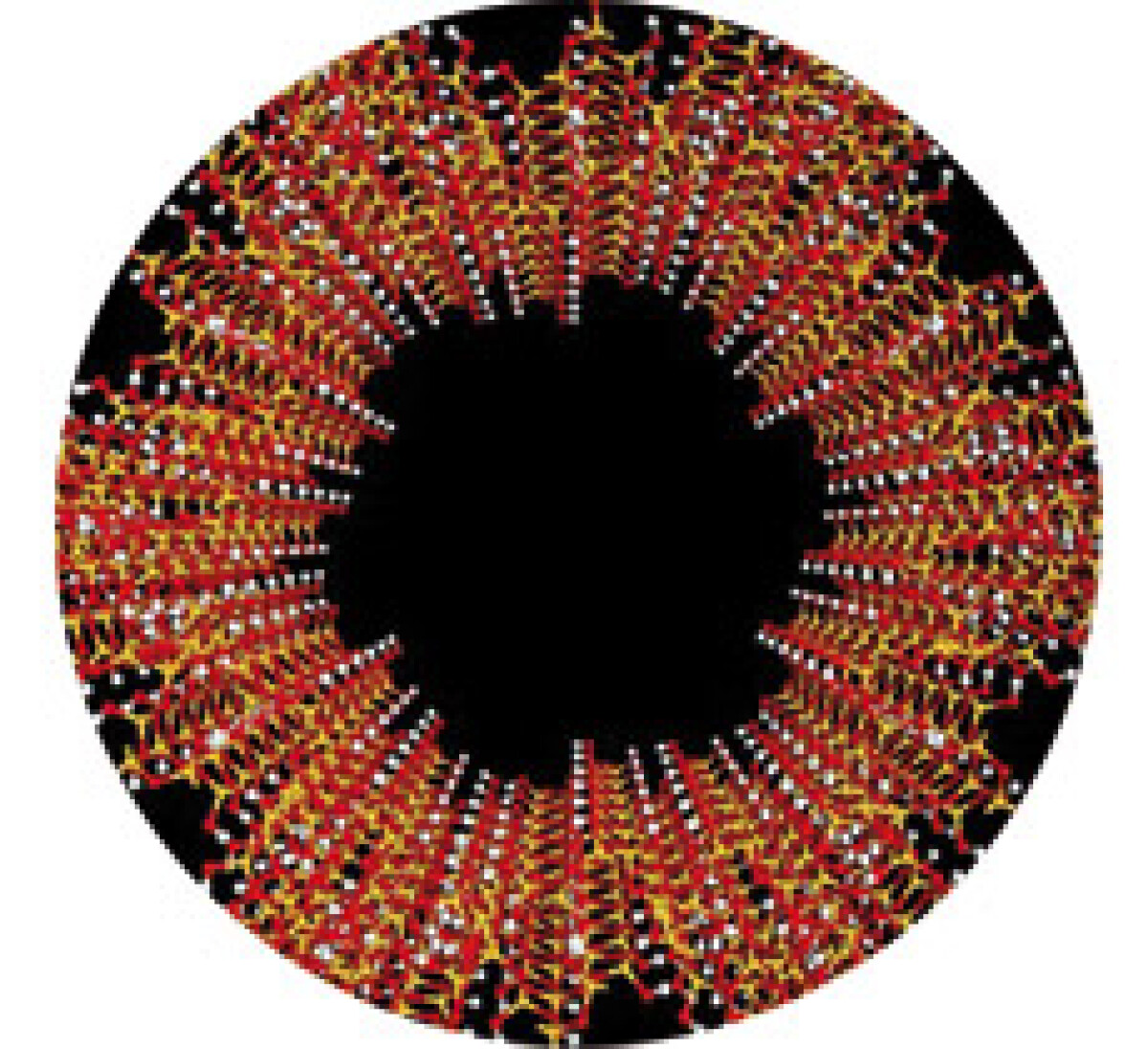
The first prototype of third generation photovoltaics that does not use silicon to generate power had been presented.
The PV of the future makes a stop in Settimo Torinese. In the presence of Paul Garbarino (Rector University Piemonte Orientale), Elena Tresso (Professor Department of Materials Science Politecnico di Torino), Salvatore Coluccia (Vice Rector of the University of Turin) and Adriano Zecchina (Director of the Center of NIS) the first prototype of next-generation organic photovoltaic was presented by Cyanine Technologies and Planet.
The prototype presented is the result of a research carried out by Cyanine, that during three years has developed and patented a range of high-tech cyanine not only in the field of life science such as markers for diagnostic activities but also in the field of photovoltaics.
The development of molecules for the production of absolutely innovative and revolutionary photovoltaic systems was considered a complementary activity to the industrial strategy of Pianeta, a municipal company of Settimo Torinese that has its core business in renewable energy and energy efficiency, and in 2010 acquired 56% of the company.
Cyanine is now in the forefront of the search for innovative materials for the third generation photovoltaics. In particular, the company has undertaken the development of new dyes for solar cells DSSC (Dye Sensitized Solar Cells). This new concept does not use silicon solar cells to generate power but a paste of nanometer titanium dioxide impregnated with an organic dye sealed between two glass wires, so they do not come into contact with moisture and oxygen which will damage the dye itself.
The panel thus produced (today the dye is available in three colors: blue, light green and yellow) with a yield of 40 watts per m2 with sunlight and 25 watts per m2 with diffused light (the one that comes from the apartment or from the office).
Assuming an average glass area of 10 m2 for an apartment of 100 m2 (considering both the production from the sun by day and night produced by the diffuse light) means a yield of 55 kWh per month.
Considering the energy bill and the savings derived, translated in figures means about € 50 every two months. An average bill for an apartment like the one above is about 150 € every two months. So it means 1 / 3 of energy costs.
Obviously this is an average. The variables are many: window display, time of the year (in summer it will much higher than the winter), m2 of glass available, etc.
A window with organic photovoltaic has an hypothetical cost that is about 40% superior than a normal window.
A normal window frame (not only glass then) costs more or less 650 €, as a consequence the window with the organic photovoltaic will cost more or less 900 €. In summary, the majority of the investment cost is absorbed in less than a year.
Benefits of the organic photovoltaics:
1) the lower cost compared to the traditional silicon photovoltaic (even the "Chinese" one).
2) it works with the scattered light, so it can be installed in areas that are not in direct sunlight.
3) the disposal has infinitely lower cost.
Once at the end of life, you retrieve the glass and the rest goes just to the incineration. The silicon’s disposal is instead expensive and complicated.
The most immediate application is the integration of architectural elements for buildings, such as windows and stained glass. But there is already a project work with a major car manufacturer to enter the cells DSSC in the roof or side/back car’s windows. But in a not too distant future, cells could be incorporated into fabrics to make, for example, jackets to load the phone, or play tents, or charge your notebook when in the evening the lights of the living or dining lunch are on, recovering (thanks to the fact that the organic photovoltaic works with diffused light) part of the consumed energy. A study is now focused also on cells based on flexible polymers, whose applications are numerous and depend only on the imagination of the designer.
