



Legislative Decree 42/2026: Energy efficiency is changing scale and focusing on self-consumption, storage, and business autonomy.
Legislative Decree 42/2026 strengthens self-consumption and storage, pushing companies towards more autonomous and efficient energy models.
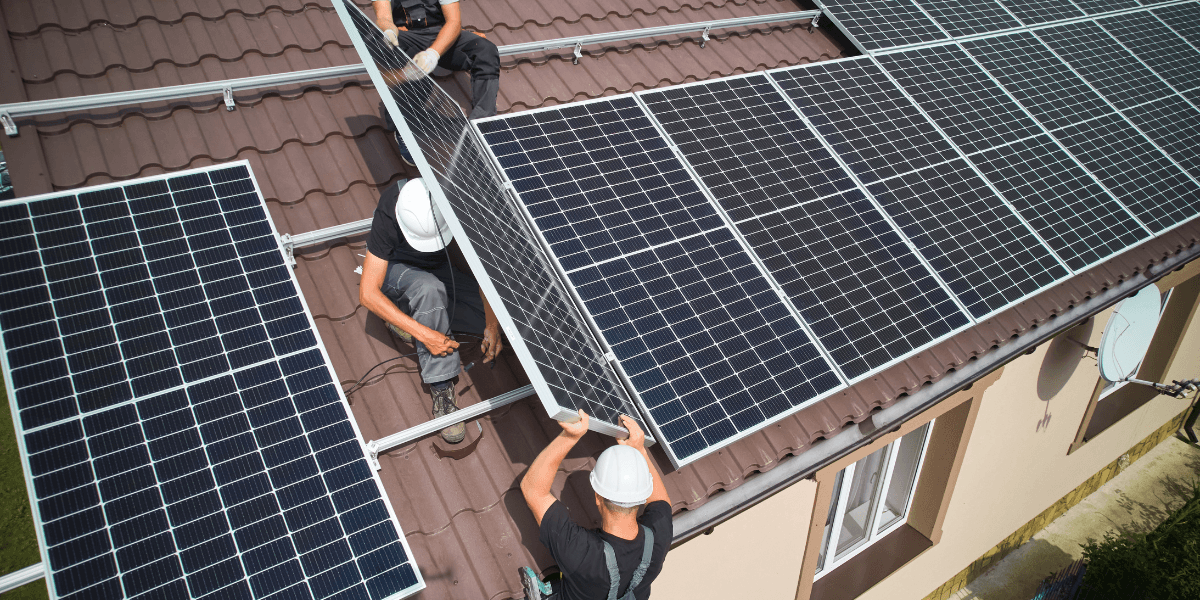
With Legislative Decree 42/2026 , the issue of energy efficiency enters a new, more structured and strategic phase. The measure, approved to strengthen business competitiveness and contain the impact of energy costs, does more than simply introduce new incentives: it redefines the way energy production, consumption, and management can coexist within production systems.
The most significant development is the strengthening of the link between economic incentives and concrete results in terms of energy savings . Investing in systems is no longer enough: it is crucial to demonstrate that these interventions generate a real improvement in efficiency.
From incentives to energy autonomy: the decree's new approach
The heart of Legislative Decree 42/2026 is support for a more distributed energy model , in which companies become increasingly protagonists in their own energy production and management.
The decree strengthens contributions for investments already underway in the energy transition and introduces new resources for interventions that integrate:
- systems powered by renewable sources for self-consumption
- energy storage systems associated with local production
- technologies for monitoring, managing and optimising consumption
This approach favors a clear evolution: moving from a system dependent solely on the grid to models in which energy is produced and managed in a more autonomous, flexible, and resilient way.
Accumulation becomes a strategic element of the transition
One of the most significant changes in the decree concerns the role assigned to storage systems. While until a few years ago, storage was considered an optional addition, today it is becoming an essential component for enhancing self-generation and stabilizing energy consumption.
In fact, accumulation allows you to:
- make the energy produced usable even outside of generation times
- reduce grid withdrawals in the most expensive bands
- increase the energy continuity of production sites
- improve the management of variable electrical loads
For businesses, it means transforming energy from a passive cost to a dynamically managed resource.
Measurable efficiency: the criteria for accessing incentives are changing.
One of the most innovative aspects of Legislative Decree 42/2026 concerns the principle that guides access to benefits: incentives are increasingly linked to results .
Companies will be required to demonstrate that their investments produce a real and documented reduction in energy consumption, in compliance with DNSH ("Do No Significant Harm") criteria and the required technical standards. This profoundly changes the approach to interventions: it's not just about installing new technologies, but also about ensuring measurable performance over time.
It is a cultural as well as regulatory transition, which rewards careful design, energy analysis, and monitoring capabilities.
Direct impacts on the world of systems and HVAC
The decree's implications also directly affect the HVAC sector and system design. The integration of renewables, storage, and intelligent consumption management requires systems capable of communicating with increasingly complex energy systems .
This opens up new opportunities in areas such as:
- energy requalification of heating and cooling systems
- integration between air conditioning and photovoltaic production
- HVAC systems with intelligent control and predictive management
- building automation oriented towards energy optimization
In this scenario, the systems are no longer simple energy consumers, but active nodes in the energy management of the building or production site.
A new balance between energy, business and competitiveness
Legislative Decree 42/2026 confirms a now evident direction: industrial competitiveness increasingly depends on the ability to produce, store, and use energy intelligently.
For businesses, investing in energy efficiency means not only reducing costs but also building greater energy independence, operational stability, and the ability to adapt in a market increasingly exposed to price volatility.
For the energy and plant engineering sectors, a phase is dawning in which integrated design, technological innovation, and intelligent management of energy flows will become central elements in building the new industrial energy system.
Related Focus


FAQ
Legislative Decree 42/2026 directly impacts energy-intensive businesses and production sites with high heating and electricity needs, pushing for decentralized energy models based on self-consumption and storage. In the HVAC/R sector, this favors the integration of high-efficiency air conditioning systems, photovoltaic systems, batteries, and energy management systems, with the aim of reducing grid dependence and stabilizing energy costs. For designers and system integrators, sizing systems capable of communicating with distributed generation becomes strategic.
The main challenge is the proper balance between generation, storage, and dynamic loads, especially with variable consumption profiles. Integration requires advanced EMS, predictive logic, and control systems capable of coordinating heat pumps, refrigeration units, and electrical storage without compromising comfort or operational continuity. Furthermore, inverter compatibility, power quality, and peak management issues must be addressed, avoiding oversizing that would reduce the return on investment.
The decree accelerates the transition from a simple efficiency approach to design geared toward energy autonomy. In the coming years, demand will increase for HVAC systems integrated with storage, corporate microgrids, and intelligent control systems capable of optimizing self-consumption and energy flexibility. For the plant engineering sector, this means evolving toward modular, interoperable, and data-driven solutions, where efficiency will no longer be assessed solely on the performance of the machine, but on the system's overall ability to adapt to available energy flows.
