
Integrated dehumidification and Indecal radiant systems: the true balance of summer comfort
Integrated dehumidification is essential for the correct functioning of summer radiant systems, allowing humidity to be managed and improving indoor comfort.
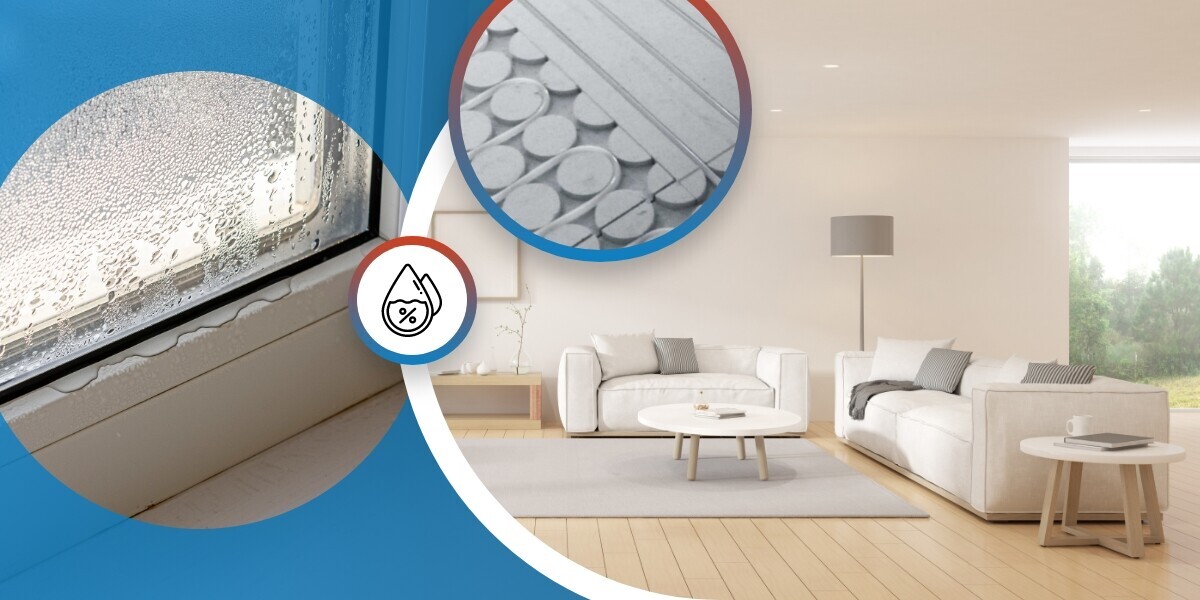
When it comes to radiant cooling , temperature is only part of the problem. In summer, especially in well-insulated residential buildings, comfort depends largely on humidity management. A radiant system that cools properly but doesn't control the vapor content in the air risks creating uncomfortable environments and, in the worst cases, condensation problems.
Integrated dehumidification therefore becomes an essential element for ensuring radiant cooling functions correctly, transforming it into a truly effective system even in the hottest months.
Why Humidity Is the Critical Factor in Radiant Cooling
Unlike traditional air systems, a radiant system works with surfaces that gradually cool. If the relative humidity of the air is too high, the dew point temperature can become dangerously close to that of the radiant surfaces, increasing the risk of condensation.
But the problem isn't just technical. Even in the absence of visible condensation, high summer humidity negatively impacts the perception of comfort: the room feels warmer, the air feels heavier, and overall well-being suffers, partially offsetting the benefits of radiant cooling.
Integrated dehumidification: not an accessory, but part of the system
Thinking of dehumidification as a separate element from the radiant heating system is one of the most common design mistakes. In advanced systems, humidity management must be integrated from the outset, interacting with the radiant heating system and adapting to the actual internal conditions of the building.
Indecal's solutions fit precisely into this logic: dehumidification is not treated as an add-on, but as a functional component of the summer system, capable of working synergistically with radiant surfaces on the floor, walls, or ceiling.
How dehumidification works when combined with radiant systems
Integrated dehumidification works by reducing the humidity in the air without disrupting the room's thermal balance. This keeps the dew point under control and allows the radiant surfaces to operate safely, even on the most humid days.
In many cases, the system is designed to perform a specific function: to continuously and controlledly control humidity, leaving the radiant floor to manage the sensible load. This separation of functions improves overall efficiency and makes comfort more stable over time.
Perceived comfort and air quality in summer environments
A properly dehumidified environment is immediately more comfortable, even at the same temperature. The air is lighter, the sensation of coolness is more natural, and the body is able to disperse heat better. This is particularly evident in residential buildings , offices , and high-traffic areas , where summer comfort directly impacts the quality of daily life.
Controlled humidity management also helps to limit the proliferation of mould and improve the healthiness of environments, an increasingly central theme in contemporary plant design.
A design approach that avoids problems and compromises
Correctly integrating dehumidification into a radiant system means preventing critical issues rather than chasing them after the system is completed . A well-designed project allows you to avoid corrective solutions, which are often more invasive and less effective, ensuring reliable operation right from the start throughout the summer season.
Integrated dehumidification is therefore not an optional element, but a design choice that enhances the radiant system as a whole , making it a complete solution for year-round comfort, not only in winter but also in the warmer periods.
Indecal