
Indecal radiant wall: a practical solution when flooring isn't an option
The Indecal radiant wall is an ideal solution for renovations and new constructions, designed to guarantee uniform comfort by exploiting vertical surfaces, without visible clutter.
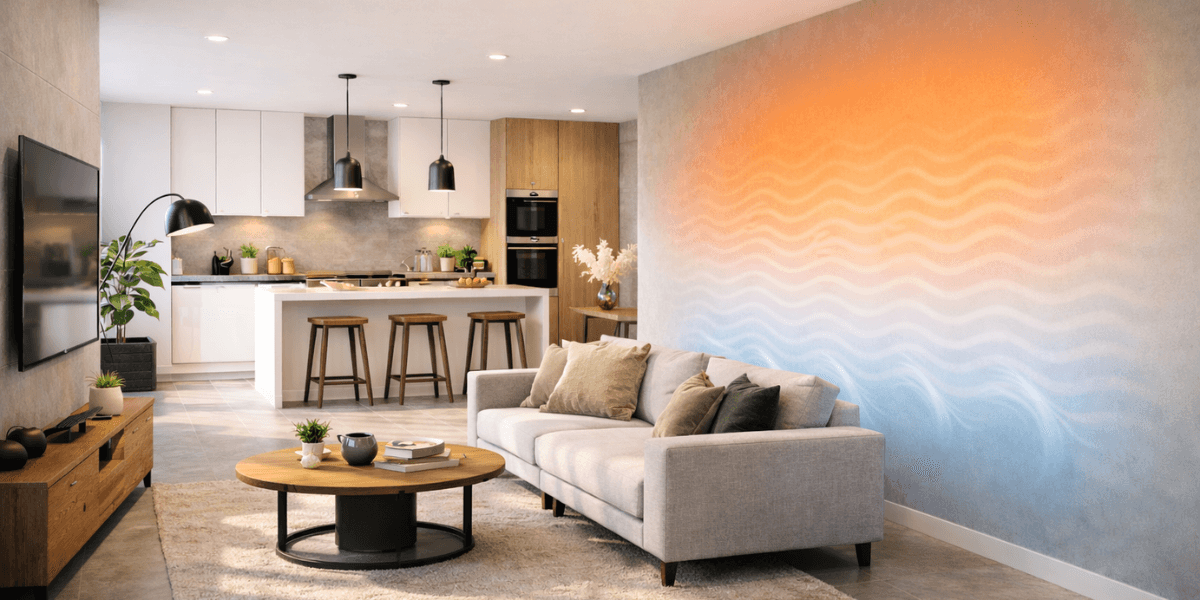
The floor isn't always the right surface for intervention. In renovations, as in projects where heights, finishes, or structural constraints limit options, a solution is needed that ensures comfort without disrupting the building . Indecal's radiant wall was created precisely to address this need: bringing the principle of radiant heating and cooling to a vertical surface, fully exploiting its benefits.
The wall , often considered only an architectural element, thus becomes an active surface , capable of effectively contributing to the comfort of the rooms, without taking up useful space or interfering with the furnishings.
How a radiant wall works and why comfort is perceived better
The Indecal radiant wall system works by radiating heat : the heat (or cooling) isn't carried by the air, but transmitted directly to people and surfaces in the room. This means more uniform temperatures and a more stable sense of well-being over time.
Vertical heat distribution is particularly effective because it naturally follows the human body along its entire height, reducing temperature differences between the floor and head area. This results in a more balanced perceived comfort, without the drafts, noise, or movement of dust typical of convection systems.
Radiant wall panels: simple integration, clean results
From a construction standpoint, the Indecal radiant wall uses prefabricated plasterboard panels with integrated pipes for water circulation . This configuration allows for quick and precise installation, with limited thickness and without invasive interventions on existing structures.
Once installed, the radiant wall disappears from view, allowing for complete design freedom. No wall terminals, no visible elements : the system operates silently and discreetly, becoming an integral part of the building's interior.
When radiant walls become the smartest choice in renovations
In redevelopment projects, radiant wall heating is one of its ideal applications. In many renovations, the floor cannot be modified, or the elevation is incompatible with doors, windows, or stairs. In these cases, moving the radiant heating to vertical surfaces allows for a significant improvement in comfort without compromising the existing structure.
The Indecal radiant wall also allows for targeted intervention, room by room , adapting to irregular geometries or spaces where uniform distribution on the floor is not possible.
New constructions: efficiency, control and design freedom
Even in new buildings, radiant walls represent an attractive solution, especially when integrated into a design that focuses on low-temperature systems and advanced comfort management. Combined with efficient generators like heat pumps, they allow for low operating temperatures, improving the system's overall efficiency.
Another important aspect is the system's responsiveness: the reduced thermal inertia of wall-mounted radiant panels allows for faster adjustments than other radiant solutions, making temperature control more precise and tailored to the actual needs of the rooms.
A system that enhances comfort without imposing on spaces
The strength of the Indecal radiant wall lies in its ability to improve comfort without being noticed . The absence of visible obstructions, the quiet operation, and the uniform temperature distribution contribute to creating more comfortable, tidy, and easy-to-manage environments, both from a system and architectural standpoint.
Whether for renovations or new builds, radiant walls are a practical technical solution, designed to solve real-world design problems and offer an effective alternative when underfloor heating isn't the right solution.
Indecal